
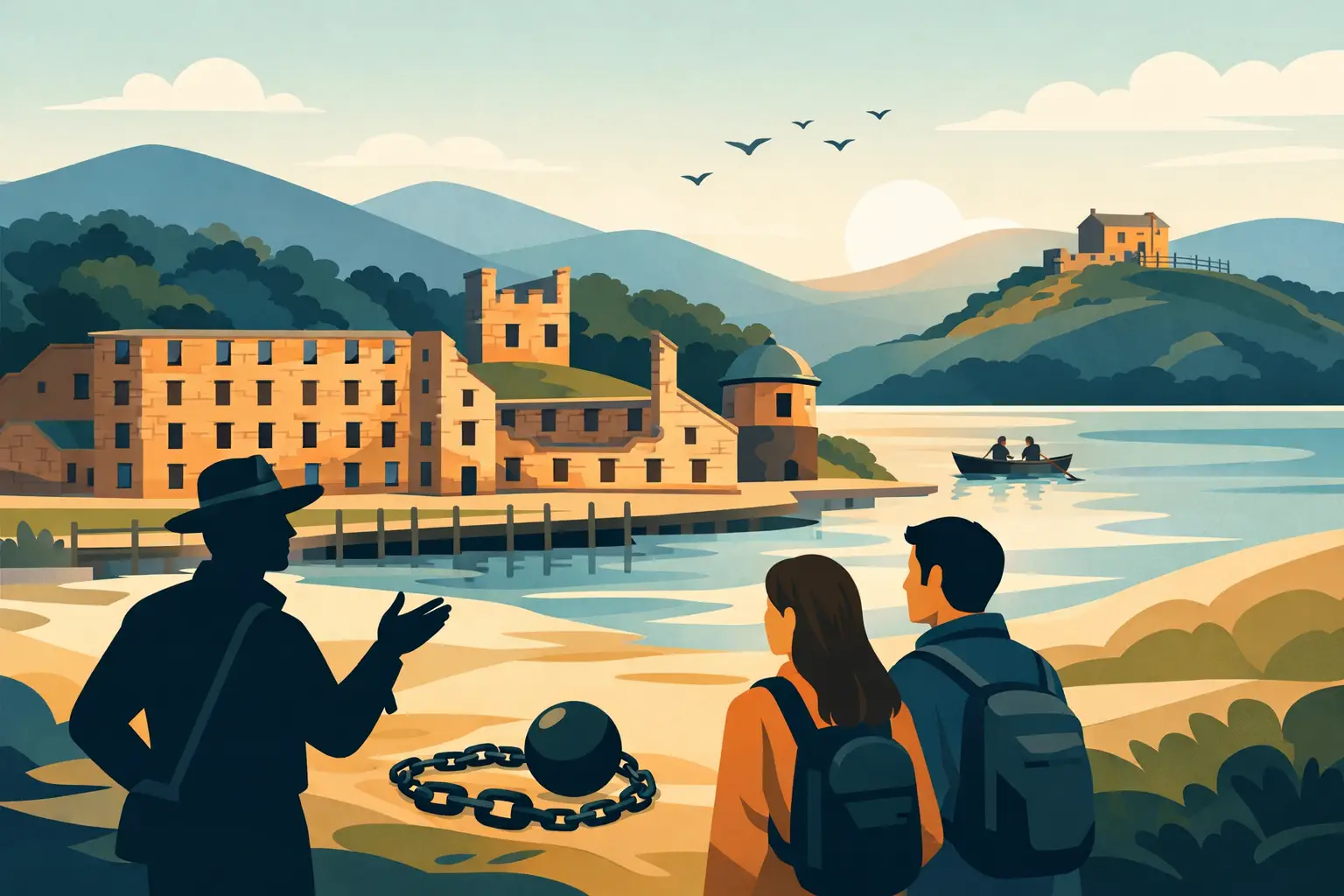
Some places wear their history lightly. Tasmania does not. Here, sandstone walls, windswept headlands, and quiet village streets still carry the weight of the island’s convict past. The best convict history tours Tasmania offers are not simply about dates and prison buildings. They reveal how transportation shaped the landscape, families, architecture, and the character of modern Tasmania itself.
For travelers who value substance as much as scenery, this part of the island’s story is one of the most rewarding to experience well. It is also one of the easiest to flatten into a standard sightseeing stop if you choose the wrong format. Convict heritage deserves time, context, and a guide who knows how to read a place beyond the information board.
Why convict history in Tasmania feels so immediate
Tasmania’s convict story is unusually tangible. You are not looking at a reconstructed idea of the past. In many places, you are standing inside it. Roads, bridges, churches, farm estates, military outposts, and entire settlements bear the imprint of convict labor and colonial ambition.
That immediacy is part of what makes these journeys so moving. Port Arthur is the name most travelers know, and rightly so, but the story does not begin and end there. Richmond, with its elegant Georgian village character, includes Australia’s oldest bridge still in use, built by convict labor. The Cascades Female Factory in Hobart brings women’s experiences into focus with a depth many visitors do not expect. Smaller sites and lesser-known corners often add the nuance that turns a historical outing into something memorable.
There is also a tension in this history that thoughtful travelers tend to appreciate. Tasmania’s convict heritage is visually beautiful in places, but the story itself is often harsh, layered, and uncomfortable. Good touring does not smooth that out. It gives it shape.
What sets the best convict history tours Tasmania apart
Not all heritage experiences are created equally. Some are efficient and surface-level, designed to move large groups through major landmarks on a fixed schedule. Others are far more considered, allowing space for the complexities that make this chapter of Tasmanian history worth understanding.
A stronger experience usually comes down to three things: pacing, interpretation, and access to the right setting at the right moment. A private or carefully tailored tour allows each of these to improve dramatically. You can linger where the story resonates, skip what feels repetitive, and shape the day around your interests, whether that means architecture, women’s history, family ancestry, or the broader social impact of the penal system.
This is particularly valuable at major sites. Port Arthur, for example, rewards a slower approach. Arriving without the pressure of a large coach schedule changes the experience. You notice the setting more clearly – the way beauty and brutality sit side by side. You have time to absorb the scale of the settlement, the isolation that made it effective as a penal station, and the evolving theories of punishment that influenced how the site was run.
The key sites to include
Port Arthur Historic Site
Port Arthur is essential, but it should never be treated as a box to check. Its significance lies not just in its preserved buildings, but in the breadth of the story held there. This was more than a prison. It was an industrial settlement, a place of punishment, reform, surveillance, labor, and control.
Visitors often arrive expecting a bleak ruin and leave struck by the landscape itself. The peninsula is beautiful, which sharpens the emotional effect. A well-guided visit helps you understand the lives behind the stonework – convicts, officers, children, and the wider community that existed within the system.
Cascades Female Factory
If you want a fuller understanding of convict history, this site matters. Women’s stories are too often compressed into a footnote, yet the Cascades Female Factory reveals a different dimension of transportation and colonial life. Poverty, punishment, labor, motherhood, and survival all intersect here.
For many travelers, this becomes one of the most affecting stops in Hobart. It is less about grandeur and more about human reality. The emotional register is different from Port Arthur, and that difference is precisely why both belong in a thoughtfully planned itinerary.
Richmond
Richmond offers contrast. It is one of Tasmania’s prettiest heritage villages, with a polished, almost pastoral charm, but that beauty is inseparable from convict labor. The bridge and historic buildings make the past feel close, yet the village setting softens the experience in a way some travelers appreciate.
It works especially well as part of a broader day that balances heavier history with gentler pacing, perhaps combined with winery visits, local produce, or scenic stops through the Coal River Valley.
Hobart’s colonial streetscape and lesser-known heritage stops
In Hobart itself, convict history is often hidden in plain sight. Old warehouses, churches, and civic buildings still shape the city’s visual identity. With local insight, seemingly ordinary corners begin to tell a larger story about labor, trade, punishment, and the development of the colony.
This is where a more bespoke experience has real value. The story can be tailored to your interests rather than forced into a broad script.
Why private touring suits this subject so well
Convict history is not light entertainment, and many travelers do not want to consume it in a crowded, fast-moving group. Privacy changes the tone of the day. It becomes more reflective, more conversational, and often more meaningful.
A private journey also allows for range. Some guests want a history-led day with serious depth. Others want convict heritage woven into a more expansive Tasmanian experience that includes countryside, food, wine, and coastal scenery. Both approaches work, and neither needs to feel rushed.
That flexibility is one of the clearest differences between a generic tour and a premium one. If you are visiting from Hobart, from a luxury lodge, or from a cruise schedule, the day can be built around ease. Door-to-door transport, a comfortable vehicle, and a guide who can read the room all matter more than many travelers realize at the time of booking.
For guests who prefer a more elevated approach, this is where a company such as VIP Tassie Experiences feels especially well matched to the subject. The history remains central, but the day is delivered with comfort, discretion, and the kind of local storytelling that gives places their proper depth.
How to choose the right convict history experience
The right choice depends on what kind of traveler you are. If this is your first visit to Tasmania and you want the landmark experience, Port Arthur should anchor the day. If you are more interested in social history and under-told narratives, prioritize the Cascades Female Factory and a layered exploration of Hobart. If you prefer heritage in a broader lifestyle setting, Richmond and the surrounding valley can be deeply satisfying.
It is also worth thinking about your pace. Some travelers enjoy a full-day historical immersion. Others prefer history in segments, balanced with a long lunch, a cellar door stop, or time to simply take in the landscape. There is no single correct version of a convict tour. The best one is the one that feels well judged for you.
Timing matters too. Shoulder seasons often suit heritage touring beautifully. The light is softer, major sites feel less crowded, and the atmosphere tends to be calmer. In peak travel periods, private planning becomes even more valuable because it can reduce the friction that often comes with popular attractions.
The deeper value of seeing this history well
Tasmania’s convict past is not interesting only because it is dramatic. It matters because it explains so much about the island that travelers see today – the built environment, the shape of old townships, the legacy of class and labor, and the resilience that threads through so many local stories.
Seen properly, convict heritage does something that many travel experiences fail to do. It slows you down. It asks more of you than a photograph and offers more in return. You leave with a sharper sense of place, and often with a more complex understanding of how beauty and hardship can occupy the same ground.
That is why these experiences resonate most when they are curated with care. Not louder. Not faster. Just more thoughtfully.
If Tasmania is on your itinerary for its landscapes, wine, and food, make room for its convict story too. It will not compete with the island’s pleasures. It will deepen them, and give the rest of your journey a stronger sense of where you truly are.



Experiences
Book a Tour
Plan your tailored Tasmanian journey with ease—reserve your private tour today.


