
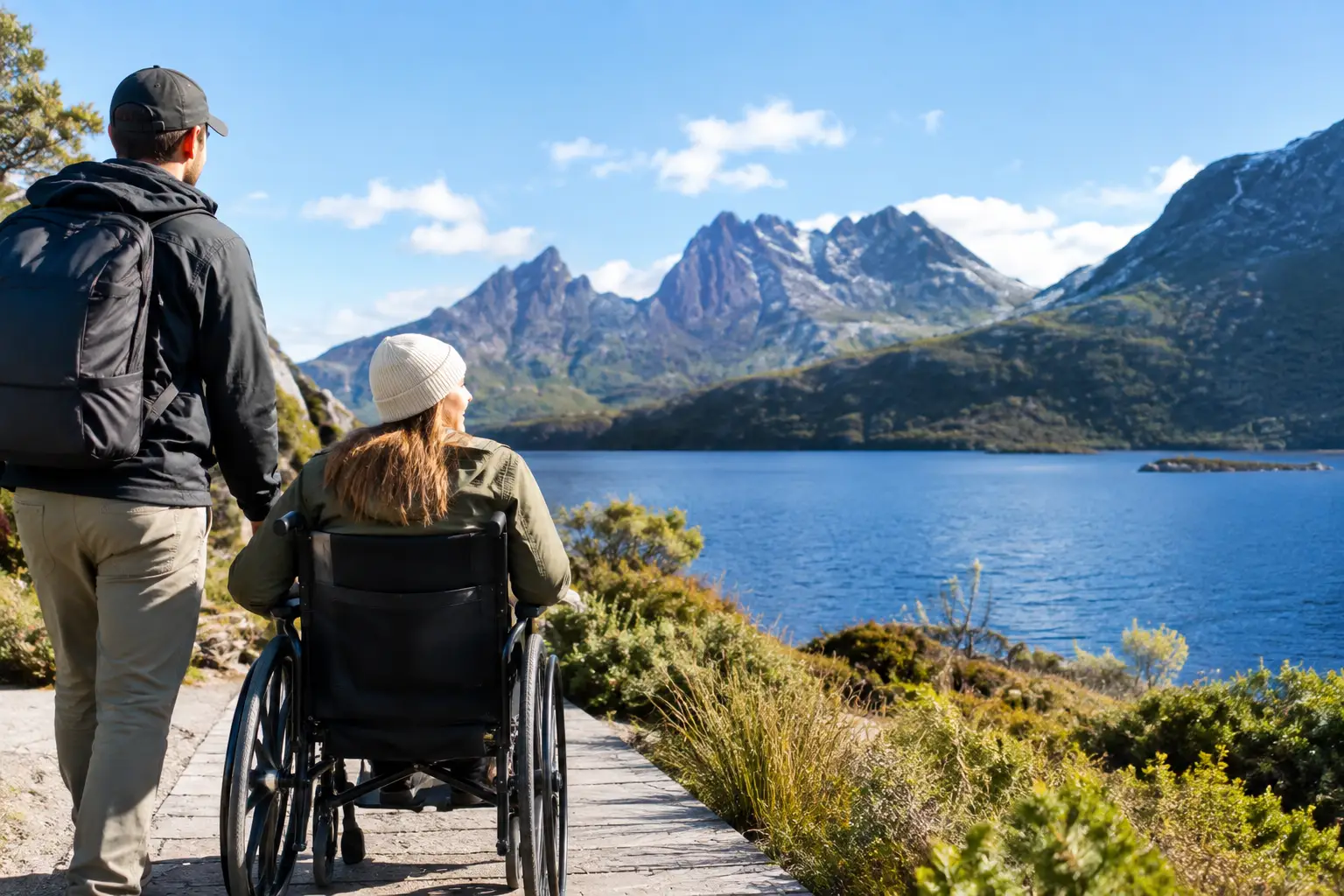
A memorable Tasmanian day should not be dictated by whether a coach can stop close enough to the view, how long a walking track runs, or whether there is somewhere comfortable to pause. Tasmania accessible tours are at their best when they begin with a conversation: what makes travel feel easy for you, what places matter most, and what practical details will let you enjoy the day with confidence.
For some guests, accessibility means minimising distances on uneven ground. For others, it is a slower pace, comfortable transport, regular rest stops, assistance with luggage, or planning around sensory needs, mobility equipment and dietary requirements. There is no single version of accessible travel. That is precisely why a private experience can make such a meaningful difference.
Why private Tasmania accessible tours feel different
Tasmania rewards unhurried travel. A misty valley seen from a quiet lookout, a long lunch overlooking vines, the salt air along a coastal road, or a conversation with a local maker can be just as moving as a strenuous hike. Yet many standard itineraries are built around fixed departure times, shared coach access and a pace designed for the average group.
A private tour allows the day to be shaped around the person, rather than asking the person to fit the day. A pick-up can be arranged from your Hobart accommodation or cruise terminal, reducing unnecessary transfers. Time can be allowed for an unhurried start, a preferred café, a scenic detour, or simply a little longer at a place that feels special.
That flexibility matters when plans need to change. Weather in Tasmania can turn quickly, and a pathway that is pleasant in dry conditions may not suit every traveller after rain. A considered local guide can adjust the route, select another viewpoint, or create an equally rewarding alternative without making the change feel like a compromise.
Accessibility starts well before the journey
The finest accessible experiences are planned in detail before the vehicle arrives. Rather than choosing a destination first and working backwards, begin with the practical realities of the day.
Share what comfort looks like for you
Clear information helps create a genuinely enjoyable itinerary. It may be useful to discuss how far you are comfortable walking, whether steps present a concern, if you use a folding wheelchair or mobility aid, and how easily you can transfer in and out of a vehicle. Let your host know if you would value frequent seating, accessible toilets, a quiet environment, or a little extra time at each stop.
These details are not limitations. They are the foundation of a better day. They allow the route, timing and venues to be chosen thoughtfully, with fewer surprises and more space to enjoy Tasmania on your own terms.
It is also wise to be specific about travelling companions. Multi-generational families often have wonderfully varied needs: one guest may want to browse galleries, another may prefer short walks, while a grandparent values easy access and a comfortable place to sit. A private itinerary can balance these preferences far more gracefully than a one-size-fits-all group schedule.
Confirm the practical details, not just the destination
A vineyard may be beautifully welcoming but have gravel between the car park and cellar door. A heritage site may offer compelling stories but include original stairs or narrow entrances. A lookout may have parking nearby, while another requires a longer approach over uneven surfaces.
This is why accessibility should never be assumed from a photograph or a general description. Ask about vehicle access, entry points, gradients, ground surfaces, toilet facilities and seating at each planned stop. If a guest is travelling with a wheelchair, confirm dimensions, storage and transfer requirements directly. The right arrangement depends on the individual, the equipment used and the day’s itinerary.
There can be trade-offs. Some of Tasmania’s most dramatic natural settings are remote, and their charm comes with rougher terrain or limited facilities. A tailored day is about making informed choices: perhaps enjoying the landscape from an accessible coastal vantage point, then pairing it with a superb local lunch and an intimate tasting, rather than trying to force an unsuitable walking experience.
Experiences that can be tailored with care
Accessible travel need not mean seeing less. It often means seeing more of what matters, without exhaustion or the pressure to keep up.
Food, wine and local produce
Tasmania’s culinary landscape lends itself beautifully to a relaxed private day. Cellar doors, distilleries, farm gates and refined restaurants can offer rich experiences without requiring long distances on foot. The pleasure lies in the detail: cool-climate pinot poured by someone who knows the vineyard, oysters at their freshest, a leisurely lunch where the table has been chosen with comfort in mind.
Venue selection remains essential. Some producers are set in historic buildings or rural locations, so access varies. With advance planning, the day can focus on places that suit your mobility and preferred pace, with dietary needs handled discreetly and thoughtfully.
Scenic drives and coastal beauty
Some of Tasmania’s most enduring views are enjoyed from close to the road. The Derwent Valley, Coal River region, Huon Valley and east coast approaches each offer changing landscapes, small town character and opportunities to pause without a demanding itinerary.
A scenic drive is not a lesser alternative to an active day. In the right hands, it becomes an experience in itself. Your guide can share the stories behind an old orchard, a convict-built village, a weathered fishing harbour or the mountains that shape the horizon. Stops can be selected for easy vehicle access, shelter, seating and the quality of the view, rather than simply their popularity.
Heritage, art and gentle cultural encounters
Tasmania’s history is complex, moving and best experienced with context. Historic towns, art spaces, gardens and artisan studios can be rewarding choices for guests who prefer cultural depth over long walks. The pace can be adjusted to allow time for a gallery conversation, a coffee in a heritage village, or a peaceful garden pause.
As with every aspect of accessible touring, older buildings require careful checking. Heritage character can mean cobblestones, thresholds and stairs. A well-planned itinerary respects the reality of each site while ensuring the day still feels generous, elegant and full.
The value of a guide who knows the alternatives
Local knowledge is often described as knowing the best places. For accessible travel, it also means knowing the best alternatives.
It is knowing which route avoids a difficult approach, which lunch venue can accommodate a mobility aid comfortably, where to find reliable facilities, and when a popular location is likely to be crowded. It is recognising when a guest would enjoy an extra ten minutes by the water more than another scheduled stop.
That judgement cannot be replicated by a map or a rigid itinerary. It comes from listening, checking current conditions and being willing to reshape the day as it unfolds. This is especially reassuring for travellers who have previously found that an advertised accessible experience was technically possible, but far from comfortable.
At VIP Tassie Experiences, the intention is never to rush guests through a checklist. A private journey is crafted around the details that make you feel looked after: refined transport, an attentive local host and an itinerary that leaves room to breathe.
A few questions worth asking before you book
Before confirming any accessible tour, ask how the itinerary will be personalised to your needs, not merely whether it is labelled accessible. Request clarity about walking distances, surfaces, vehicle entry, toilet access and seating. If particular places are non-negotiable, ask what the access is really like and whether there is a comparable alternative nearby.
It is equally helpful to ask about timing. A slightly earlier departure can avoid crowds and make parking closer. Allowing a longer day may create a more relaxed rhythm, while a shorter itinerary with fewer stops can be the more luxurious choice for some travellers. Comfort is not an add-on to the experience. It is what makes the experience possible.
Tasmania is most generous when it is experienced at a pace that feels like your own. With careful planning and a host who listens closely, the island’s flavours, stories and extraordinary scenery can meet you where you are – comfortably, beautifully and without hurry.


Experiences
Book a Tour
Plan your tailored Tasmanian journey with ease—reserve your private tour today.


