
Table of Contents
- Getting Around Tasmania Without the Guesswork
- A 7-Day Tasmania Itinerary That Doesn’t Rush You
- Tasmania Itinerary for Families: Keeping Everyone Happy
- What to Pack for Tasmania: Layers, Boots and the Unexpected
- Seasonal Conditions and Weather-Specific Planning
- Booking Timeline and Cancellation Flexibility
- Connectivity, Offline Navigation and Contingency Planning
- Frequently Asked Questions
Last Updated: October 13, 2026
Getting Around Tasmania Without the Guesswork
Stress-free Tasmania travel tips start with one decision: how you move. Get that right and everything else falls into place. At VIP Tassie Experiences, we plan private day tours around the island.
The good news? Getting around Tasmania is simpler than most first-timers expect. Distances look short on a map. They rarely feel short on the road.
Here’s the thing nobody tells you: Tasmania rewards slow travel. A rushed loop of the island is the fastest way to ruin a good holiday.

Self-Drive: The Freedom and the Fatigue
A rental car gives you the most freedom, and the most fatigue. You control the pace, the stops and the detours. You also do all the driving, parking and navigation yourself.
Mountain roads twist. Wildlife appears at dusk. A 150 km stretch can take well over two hours.
For confident drivers who enjoy the wheel, self-drive works well. For anyone who wants to actually look out the window, it doesn’t.
Car-Free Options: Buses, Coaches and Private Transfers
You can absolutely see Tasmania without a car. Public buses link the main cities. Coach services cover popular routes. Private transfers and guided day tours fill the gaps.
The trade-off is flexibility. Buses run on set timetables, and many of the best spots sit well off the network.
That’s where private touring shines. A local guide handles the roads, the timing and the parking, so your only job is enjoying the day.
A 7-Day Tasmania Itinerary That Doesn’t Rush You
A relaxed 7-day Tasmania itinerary moves in one direction and stops often. The common mistake is trying to circle the whole island in a week. You can’t, not without spending your holiday in the car.
Pick a region or two. Go deep, not wide. The route below runs Hobart to Launceston via the east coast, the island’s classic drive, and builds in the buffer days most itineraries forget.
| Day | Route | Approx. drive time | Overnight stop | Pace |
|---|---|---|---|---|
| 1 | Arrive Hobart, settle in, short harbour walk | 0-30 min | Hobart | Easy |
| 2 | Hobart to Port Arthur and back | 1 hr 30 min each way | Hobart | Moderate |
| 3 | Hobart to Freycinet (via Orford, Swansea) | 2 hr 30 min | Coles Bay | Moderate |
| 4 | Freycinet to Bicheno | 40 min | Bicheno | Easy |
| 5 | Bicheno to Launceston (via St Helens, Scottsdale) | 3 hr 30 min | Launceston | Long drive |
| 6 | Launceston and Tamar Valley loop | 1 hr total | Launceston | Easy |
| 7 | Launceston, fly out | 20 min to airport | , | Easy |
Drive times above are realistic for a relaxed pace, not a racing one. Add 20-30% if you’re towing, in a campervan, or travelling with young children.
Sample Route: Hobart to Launceston via the East Coast
The east coast route is the island’s classic drive. It strings together beaches, wineries and wildlife without endless backtracking.
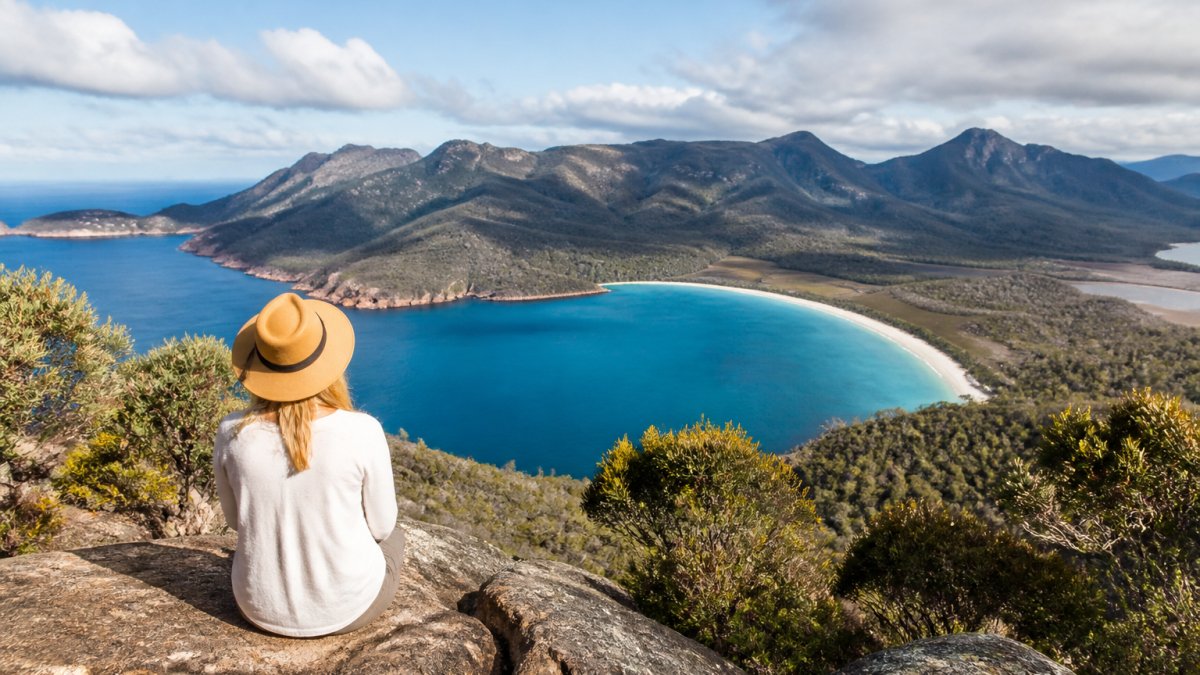
- Day 3, Hobart to Freycinet. Break the drive at Orford for a coffee and a leg stretch, then again at Swansea for a bakery stop. Arrive at Coles Bay by mid-afternoon so you can walk to the Wineglass Bay lookout before dinner.
- Day 4, Freycinet to Bicheno. Short hop. Use the morning for a beach walk or a cruise, then drive the 40 minutes to Bicheno for the evening penguin tour.
- Day 5, Bicheno to Launceston. The long day. Stop at St Helens for lunch, then push through Scottsdale. Aim to arrive before dark, wildlife on this stretch is a genuine hazard.
Book two nights in Freycinet if you can. One night there is a tease.
Where to Add Buffer Days
Add a buffer day after any long drive. Add another if you’re travelling with kids or grandparents.
Buffers absorb late ferries, closed roads and slow mornings. They’re the difference between a holiday and a schedule. If you only have one spare day, put it after Day 5, that’s the drive most likely to run long.
If a road closes or the weather turns, you can swap Day 4 and Day 5 without losing a booking. Keep both nights refundable until 48 hours out.
Tasmania Itinerary for Families: Keeping Everyone Happy
A good Tasmania itinerary for families plans around energy levels, not landmarks. Grandparents, parents and kids rarely want the same day.
The fix is simple: one anchor activity each day, then optional extras.
- Mornings for the big outing, when everyone’s fresh
- Afternoons for rest, a short walk or a playground
- One flexible day with nothing booked at all
Private touring helps here. You set the pace, skip the queues and head home when the youngest has had enough.
Plan your longest drive for day two or three, not day one. Everyone’s still tired from travelling, and a big first day sets a grumpy tone for the whole trip.
What to Pack for Tasmania: Layers, Boots and the Unexpected
What to pack for Tasmania comes down to layers, because you’ll meet four seasons in one day. A sunny morning can turn into a cold, wet afternoon within an hour.
Pack for cool weather even in summer.
- Thermal base layers and a warm mid-layer
- A waterproof jacket with a hood
- Comfortable walking boots, already broken in
- A beanie, gloves and a scarf, yes, even in January
- Sunscreen and sunglasses, the UV is fierce
- A refillable water bottle and snacks
Leave the heavy suitcase at home. You’ll repack constantly.
Seasonal Conditions and Weather-Specific Planning
Weather shapes every Tasmania travel trip, and most guides gloss over it. The useful question isn’t ‘what’s the forecast?’, it’s ‘what does this season do to my itinerary?’
Summer (December-February)
Long daylight, sunset around 8:30-9 pm in Hobart at the peak, means you can drive later and still arrive in light. The trade-off is demand: campsites, ferry spots and popular walks fill weeks ahead, and the east coast can hit the high 20s while the highlands stay in single digits.
Plan around the heat, not the cold. Start walks early. Book everything.
Autumn (March-May)
The sweet spot for many travellers. Daylight is still generous in March, roads are quieter, and the Fagus turns on the highlands in late April and early May. Expect sudden cold fronts from April onwards, a warm afternoon can end in sleet at altitude.
Winter (June-August)
Short days, sunset can be before 5 pm, and snow on the highlands. Some alpine roads and walking tracks close or become unsafe without proper gear. Many east coast attractions run reduced hours. If you’re driving in winter, plan to be at your destination well before dark and check road closures the morning of travel.
Spring (September-November)
Unpredictable. You can get a 22°C day followed by a week of rain. Wildflowers and waterfalls are at their best, but so is the mud on walking tracks. Waterproof boots stop being optional.
The Planning Rule That Actually Works
Check the forecast the night before, every night. Then plan around it, not against it. If a long drive day looks wet, swap it with a shorter one, most itineraries can absorb one swap without rebooking anything.
For road closures, bushfire alerts and safety updates, check Tasmania’s official emergency information before any long drive. Conditions change fast in remote areas.
Bushfire risk peaks in summer and can close roads with little notice. Never drive past a road-closed sign, even if the route looks clear ahead.
Booking Timeline and Cancellation Flexibility
Book the big things early and the small things late. Ferries, popular accommodation and peak-season tours fill months ahead.
Off-peak, you have far more room to move.
- Book ferry crossings and vehicle spots as soon as dates are fixed
- Reserve accommodation early for summer and school holidays
- Leave restaurants and day tours flexible where you can
- Read cancellation terms before you pay
Flexible bookings cost a little more. They save holidays.
Connectivity, Offline Navigation and Contingency Planning
Phone reception drops out on many rural roads, so never rely on live maps alone. Download offline maps before you leave each town.
Then build a backup plan.
- Screenshot your route and key stops
- Save your accommodation’s phone number
- Carry a paper map as a fallback
- Tell someone your plan for the day
For official travel advice and safety guidance, check the Australian government’s Smartraveller service and Tasmania’s parks and wildlife safety pages before heading into remote areas.
Don’t plan a long drive to arrive after dark. Wildlife is active at dusk and dawn, and rural roads have no lighting. A late arrival is a real safety risk, not just an inconvenience.
Frequently Asked Questions
What is the most effective way to travel around Tasmania?
It depends on your priorities. A self-drive road trip gives you the most flexibility, but you will cover long distances on winding roads. If you prefer not to drive, private transfers or small-group tours remove the navigation and parking stress. Many travellers mix a few private tour days with a relaxed base in Hobart or Launceston. Booking transport in advance, especially for ferry crossings, is essential for stress-free travel in Tasmania.
What should you pack for a week in Tasmania?
Pack for four seasons in one day. Bring layers: a thermal base, a fleece or jumper, and a waterproof jacket. Comfortable walking boots are a must for national parks and trailheads. Include a hat, sunscreen, insect repellent, and a reusable water bottle. If you are camping, add a good tent, mattress, and cooking equipment. For a 7-day Tasmania itinerary, a small daypack for hikes and a power bank for your phone will keep you moving without hassle.
How can you get around Tasmania if you do not want to drive?
You have several options. Public buses and coaches connect major towns, but they run limited schedules. Guided tours and private day tours offer door-to-door service and local commentary. Cycling and motorbike hire suit adventurous travellers. For families or groups, private transfers can be cost-effective and flexible. Booking in advance is wise, especially in peak season, to avoid sold-out services.
How many days do you need to explore Tasmania without rushing?
Seven days is a good starting point for a relaxed loop covering Hobart, the East Coast, and Launceston. Ten to fourteen days let you add Cradle Mountain, the West Coast, and more rest stops. Allow extra time for driving distances and weather delays. A 7-day Tasmania itinerary can work if you limit daily driving to three hours and book accommodation ahead. For a truly unhurried pace, consider basing yourself in two or three regions rather than moving every night.
Tasmania rewards travellers who slow down, and punishes those who don’t. The roads are beautiful but slow, and the best moments rarely fit a tight schedule.
That’s exactly why we do what we do. VIP Tassie Experiences builds private, local-led day tours with tailored itineraries, spacious modern vehicles and no crowded buses or rigid schedules. You set the pace; we handle everything else.
Book your tour with VIP Tassie Experiences and see the island the unhurried way.


Experiences
Book a Tour
Plan your tailored Tasmanian journey with ease—reserve your private tour today.


