
Table of Contents
- Why Avoiding Crowded Bus Tours in Tasmania Matters
- Private Tour Itinerary: Designing Your Own Pace
- Tasmania Tours Without a Car: Realistic Options
- Day Tours from Hobart: Choosing Smaller Groups
- Flexible Tour Schedules: Booking Tactics and Timing
- Crowd Levels by Attraction and Time of Day
- Common Mistakes When Avoiding Crowded Bus Tours
- Frequently Asked Questions
Last Updated: October 12, 2026
Why Avoiding Crowded Bus Tours in Tasmania Matters
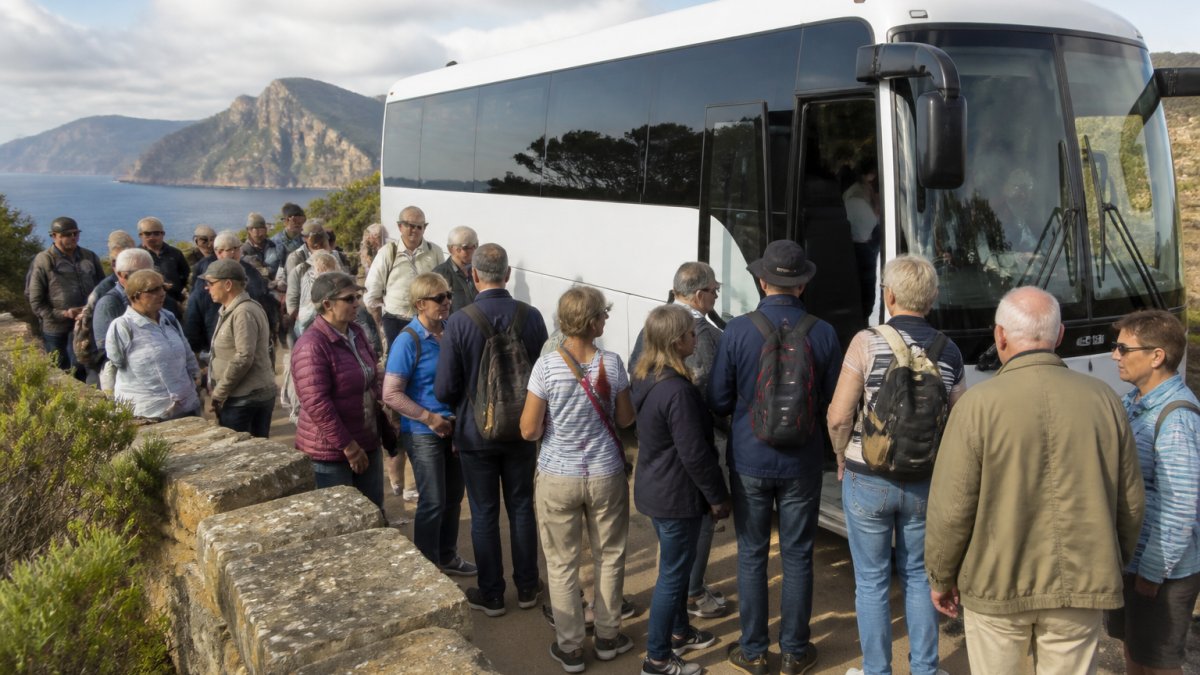
Avoiding crowded bus tours in Tasmania is the single biggest upgrade you can make to a trip built around wilderness, wildlife and small towns that were never designed for volume.
This guide from VIP Tassie Experiences sets out how to plan a trip that skips the convoy entirely. We will cover private itineraries, car-free options, smaller day tours from Hobart, and the booking tactics that keep you ahead of the pack.
Tasmania is compact, but its roads are not built for crowds. Many of the best stops sit at the end of narrow, winding routes with room for a handful of vehicles.
Here is what most guides miss: the crowd problem is rarely about one bus. It is about six buses arriving within the same 45-minute window.
The fix is not finding secret attractions. It is controlling your arrival time, your group size and your route order. Those three levers do almost all the work.
Private Tour Itinerary: Designing Your Own Pace
A private tour itinerary is a day plan built around your interests, your pace and your timing, rather than a fixed route shared with strangers. You choose the stops, the start time and how long you linger.
That flexibility is where the real value sits. Popular attractions in Tasmania have clear quiet windows. A private schedule lets you reach them before the first coaches, then move on as the car park fills.
Tourism Tasmania’s official visitor information notes that many of the island’s headline experiences sit within a few hours of each other, which makes route order everything.
The route-order principle
Most coach tours run the same loop in the same direction because it is the most efficient drive. That means the crowd arrives at stop one, then stop two, then stop three, in a predictable sequence.
A practical example from a Hobart-based day: most coaches head first to Mount Wellington, then down to the Huon Valley for Russell Falls, then back through New Norfolk. Run it the other way. Start at Russell Falls as the gates open, work back through the valley, and reach Mount Wellington in the late afternoon when the coach groups have gone.
Quiet windows that actually hold up
These are the patterns most local guides work to, based on how coach schedules cluster rather than on any official figure:
- Mount Wellington (kunanyi): quietest before 8:30am and after 4pm. The mid-morning to early-afternoon block is when most day tours summit.
- Russell Falls, Mount Field National Park: quietest before 10am. Coach groups typically arrive late morning after a Hobart pickup.
- Port Arthur Historic Site: quietest in the first hour after opening and again in the last 90 minutes before close. Midday is the crush.
- Tasman Arch and Devil’s Kitchen, Tasman National Park: quietest late afternoon. Most tours pass through late morning en route to Port Arthur.
- Wineglass Bay lookout, Freycinet: quietest before 9am. The walk up fills from mid-morning.
These windows shift with season and weather, so treat them as a starting pattern rather than a fixed timetable. The mechanism is simple: coaches run fixed schedules, so they cluster. Independent travellers and private tours can move around them.
Building your own plan
A workable private itinerary usually looks like this:
- Pick two or three anchor stops, not ten
- Group stops by direction so you are not backtracking
- Front-load the busiest attraction to arrive at opening, or save it for late afternoon
- Leave one slot open for a spontaneous detour
- Build in a long lunch rather than a rushed one
A common mistake is overfilling the day. Three unhurried stops beat seven rushed ones every time. The second common mistake is treating the itinerary as fixed. The best private days bend when the weather turns or when a stop is unexpectedly busy.
If you are self-planning, write your route in reverse of the standard coach loop. It costs nothing and it is the single most effective crowd-avoidance tactic available to an independent traveller.
Tasmania Tours Without a Car: Realistic Options
Tasmania tours without a car fall into four broad types, and each suits a different traveller. Knowing them before you book saves a lot of frustration.
| Option | Group Size | Flexibility | Best For |
|---|---|---|---|
| Private vehicle and guide | Your group only | Very high | Couples, families, small groups |
| Small-group day tour | 6-12 people | Moderate | Solo travellers, couples |
| Self-guided with transfers | You set the pace | High | Confident independent travellers |
| Public buses and coaches | Large | Low | Budget-focused, major towns only |
Public transport exists, but it is thin outside the main centres. Regional services run limited timetables, and many attractions have no service at all. That is the honest reality of car-free travel here.
Self-guided travel works if you mix scheduled transfers with walking trails. It falls apart the moment you want a remote lookout at sunrise.
For travellers who want the freedom of a car without driving, a private tour is the closest match. You get the route control of a road trip and none of the navigation stress.
Day Tours from Hobart: Choosing Smaller Groups
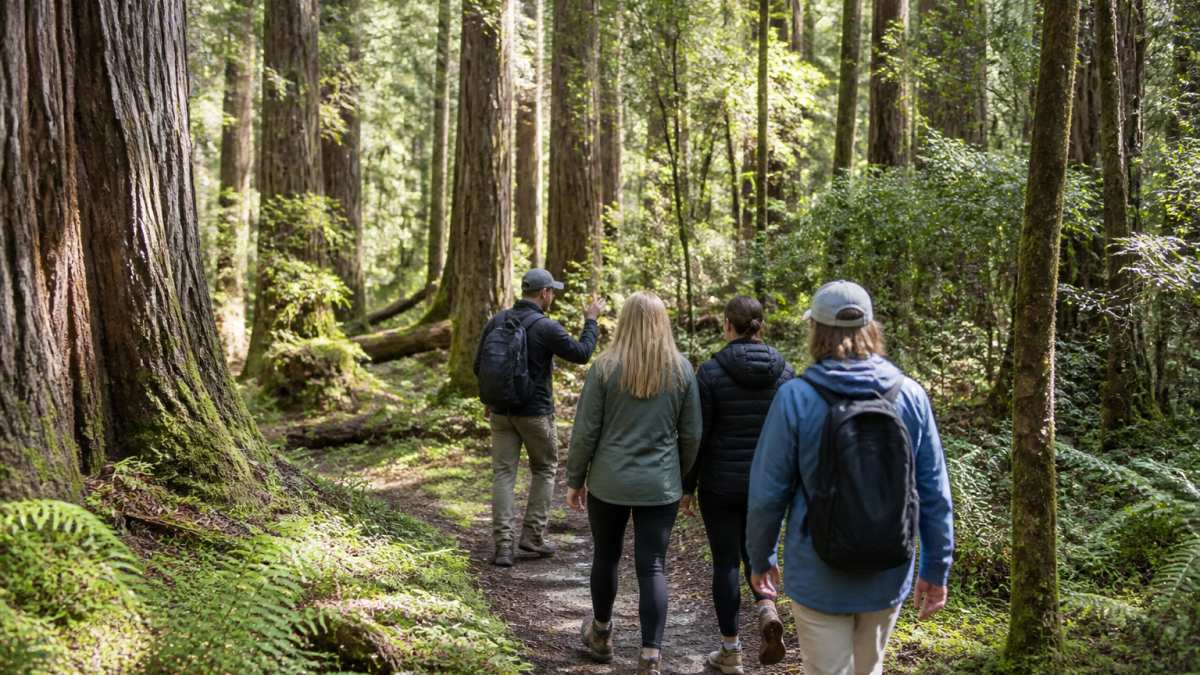
Small-group day tours from Hobart cap passenger numbers, which changes the whole experience. Look for departures limited to around a dozen people or fewer. The keyword here is actual cap, not marketing language. “Small group” is not a regulated term, and some operators use it for vehicles carrying twenty or more.
What the main Hobart day-trip routes look like
Most Hobart day tours run one of a handful of standard routes. Knowing them helps you pick the quieter option and time your departure.
- Mount Wellington (kunanyi): a half-day route, usually 3 to 4 hours. Departures cluster between 8:30am and 10am. An early departure puts you at the summit before the first coach.
- Port Arthur: a full day, typically 10 to 11 hours including the drive down the Tasman Peninsula. Most operators leave Hobart between 7:30am and 8:30am. Leaving earlier means arriving before the midday tour buses.
- Russell Falls and Mount Field: a full day, often combined with the Derwent Valley. Coach groups tend to reach the falls late morning.
- Wineglass Bay and Freycinet: a long full day, usually 12 hours or more. The east coast drive means most groups reach the lookout from mid-morning.
- Bruny Island: a full day including the ferry crossing. Ferry timetables constrain departure times more than crowd patterns do, so book the earliest crossing you can.
Questions that actually separate operators
Size is not the only signal. Ask these before you book:
- What is the maximum group size, in numbers?
- What vehicle is used for that number?
- How many stops are on the route?
- What time does the tour actually depart, not just the pickup window?
- Is hotel pickup included, or is it a central meeting point?
- Is the itinerary fixed, or can the guide adjust stop order on the day?
A tour that leaves at 7am beats one leaving at 9am for the same attraction. You simply arrive first. The departure time is often a better predictor of crowd experience than the group size.
The group-size trade-off
Smaller is not automatically better for every traveller. A 6-person tour in a compact vehicle can feel cramped on a long drive, and luggage space is limited. A 12-person minibus usually hits the sweet spot between intimacy and comfort. Above about 20 passengers, you are back in coach territory for practical purposes, even if the vehicle is technically a minibus.
Ask whether the itinerary is fixed or adjustable. Operators running smaller vehicles can often shift a stop by 30 minutes to dodge a coach arrival. That small change is the difference between a quiet lookout and a queue.
Mount Wellington, Russell Falls and Port Arthur all sit within reach of a Hobart day trip. Each has a peak window you can plan around, and each rewards an early or late arrival over a midday one.
Flexible Tour Schedules: Booking Tactics and Timing
Flexible tour schedules come down to two things: when you book and how easily you can change your mind. Both are controllable.
Book direct where you can. Smaller operators often hold a few places back and can move you to a quieter departure. Third-party booking sites rarely offer that.
Cancellation terms matter more than most people think. Weather in Tasmania shifts fast, especially on the West Coast and at altitude. A flexible policy lets you swap a wet mountain day for a dry coastal one.
Timing your booking also helps:
- Book peak season weeks ahead, not days
- Ask about shoulder season departures, which are quieter
- Choose weekdays over weekends where possible
- Request the earliest departure slot available
Shoulder season travel is the quietest lever of all. Fewer visitors, same landscape.
Crowd Levels by Attraction and Time of Day
Crowd levels by attraction follow a fairly predictable rhythm, and you can plan around it without any special access.
| Attraction | Quietest Window | Busiest Window |
|---|---|---|
| Mount Wellington | Early morning | Mid-morning to early afternoon |
| Russell Falls | Before 10am | Late morning |
| Port Arthur | At opening | Midday |
| Tasman National Park | Late afternoon | Late morning |
| Wildlife parks | Late afternoon | Mid-morning |
The pattern is consistent. Coaches run on fixed schedules, so they cluster. Independent travellers and private tours can move around them.
Parks and Wildlife Service Tasmania manages many of these sites and publishes visitor information worth checking before you go, particularly for walking trails and accessibility.
One practical rule: arrive at the headline attraction first, then work backwards through your list. By the time the coaches reach stop one, you are already at stop three.
Common Mistakes When Avoiding Crowded Bus Tours
The biggest mistake is choosing a tour by price alone. Cheaper usually means bigger, and bigger means slower.
Other traps we see often:
- Booking a “small group” tour without checking the actual cap
- Scheduling the top attraction for midday
- Packing too many stops into one day
- Ignoring weather flexibility in the plan
- Assuming public transport covers remote attractions
A second common error is treating all group tours the same. A 12-person minibus and a 50-seat coach are entirely different products, even when they visit the same places.
If a listing does not state a maximum group size, assume it is large. Ask directly before paying. Turning up to a full coach when you expected a small group is the most common complaint we hear from travellers who booked elsewhere.
The final mistake is rigidity. The best days in Tasmania bend with the weather and the crowds.
Planning a trip around avoiding crowded bus tours in Tasmania takes more thought than booking a seat and hoping for the best. VIP Tassie Experiences builds private, local-led day tours with tailored itineraries, spacious modern vehicles and no crowded buses or rigid schedules. Book your tour with VIP Tassie Experiences and see the island at your own pace.
Frequently Asked Questions
How can I avoid crowded bus tours in Tasmania?
Choose private or small-group tours instead of large coach buses. Private tours cap passenger numbers, often at six or fewer, and let you set departure times outside peak hours. Book weekdays rather than weekends, start early to reach attractions before coach groups arrive, and ask operators directly about maximum group size. Flexible tour schedules and custom itineraries also help you sidestep the busiest time slots at popular sites.
What are the alternatives to a bus tour if I do not drive?
Non-drivers can use public buses between major centres, join small-group day tours from Hobart, or book private guided experiences. Tasmania tours without a car are limited in remote areas like the West Coast, so plan around serviced routes. Private tours with a local guide cover more ground and remove the stress of navigating regional transport schedules that often run only once or twice daily.
Are private day tours less crowded than bus tours?
Yes. Private day tours carry only your group, so you avoid the 40 to 50 passengers typical of coach buses. This means shorter waits at attractions, quieter walks, and the freedom to linger or leave early. Smaller vehicles also access locations large coaches cannot reach, such as narrow vineyard roads or trailheads. For couples and families, this often makes the difference between a rushed stop and a genuinely unhurried visit.
How far in advance should I book a private tour?
Book at least four to six weeks ahead for travel during peak season (December to February) and school holidays. Shoulder season (March to May, September to November) allows more flexibility, but popular guides still fill quickly. If your dates are fixed, confirm cancellation terms when booking so you can adjust if plans change.


Experiences
Book a Tour
Plan your tailored Tasmanian journey with ease—reserve your private tour today.


