
Table of Contents
- What Makes a Private Day Tour Worth It
- Quick Comparison: Private Tour Styles at a Glance
- Day Tours from Hobart: Where Private Travel Opens Doors
- Luxury Private Tours Tasmania: What Sets Them Apart
- Bespoke Travel Itineraries: How Customisation Works
- Pricing and Inclusions: What to Expect
- Sustainable and Eco-Certified Tour Operators
- Seasonal Tips and Weather Planning
- Frequently Asked Questions
Last Updated: September 28, 2026
What Makes a Private Day Tour Worth It
A private day tour is a fully customised travel experience with a dedicated vehicle and guide, built around your interests, pace and schedule rather than a fixed group itinerary. In Tasmania, that flexibility matters more than almost anywhere else: distances between highlights are short enough to link several experiences in a single day, but only if you can move on your own timetable.
Quick Comparison: Private Tour Styles at a Glance
Private touring in Tasmania comes in three broad styles, and the right one depends on your group size, budget and how much control you want over the day.
| Tour Style | Typical Duration | Group Size | Best For |
|---|---|---|---|
| Half-day private excursion | 3-5 hours | 1-6 guests | Tight schedules, city and heritage sights |
| Full-day private tour | 7-9 hours | 1-6 guests | Wine regions, national parks, coastline |
| Bespoke multi-stop itinerary | 8-10 hours | 2-11 guests | Custom routes, multi-generational groups |
Day Tours from Hobart: Where Private Travel Opens Doors
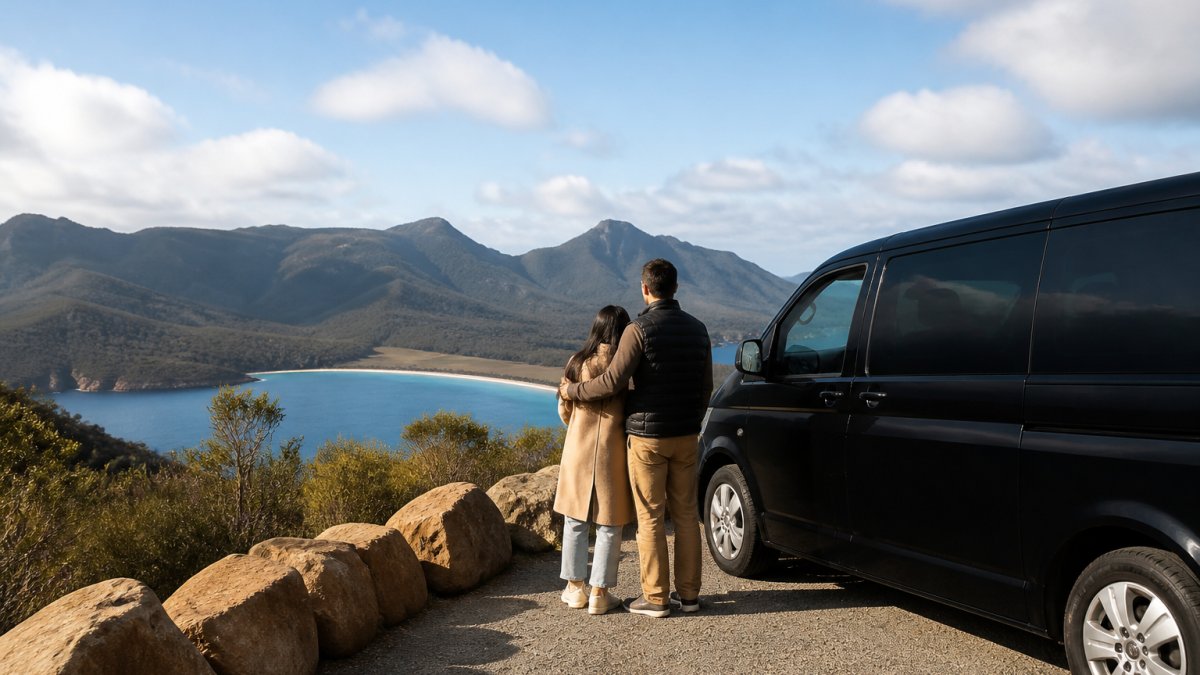
Day tours from Hobart are where private travel pays off fastest. A chauffeur-driven day lets you combine the heritage streets and waterfront of the city with the scenic coastline, boutique vineyards and national parks beyond it, without waiting on a coach group’s schedule. Popular private routes link the Derwent Valley and its cellar door stops, the Tasman Peninsula’s colonial history, and the east coast’s wilderness lookouts.
Half-Day vs Full-Day Private Excursions
Half-day private excursions run three to five hours and suit travellers with an afternoon flight or an evening commitment. Full-day private tours stretch seven to nine hours, which is what you need for wine regions, national parks or anything involving a longer coastal drive. If your must-see list spans food, wildlife and history, book the full day and let your guide sequence it.
Accessibility and Mobility Considerations
Accessibility is where private touring wins outright. A private vehicle can carry mobility aids, adjust walking distances and skip uneven ground entirely. When you enquire, state your needs up front: step-free entry points, shorter strolls, seating at each stop. Tasmania’s heritage sites and national parks vary widely in terrain, so a guide who knows the ground can match stops to your group’s ability rather than forcing a fixed route.
Luxury Private Tours Tasmania: What Sets Them Apart
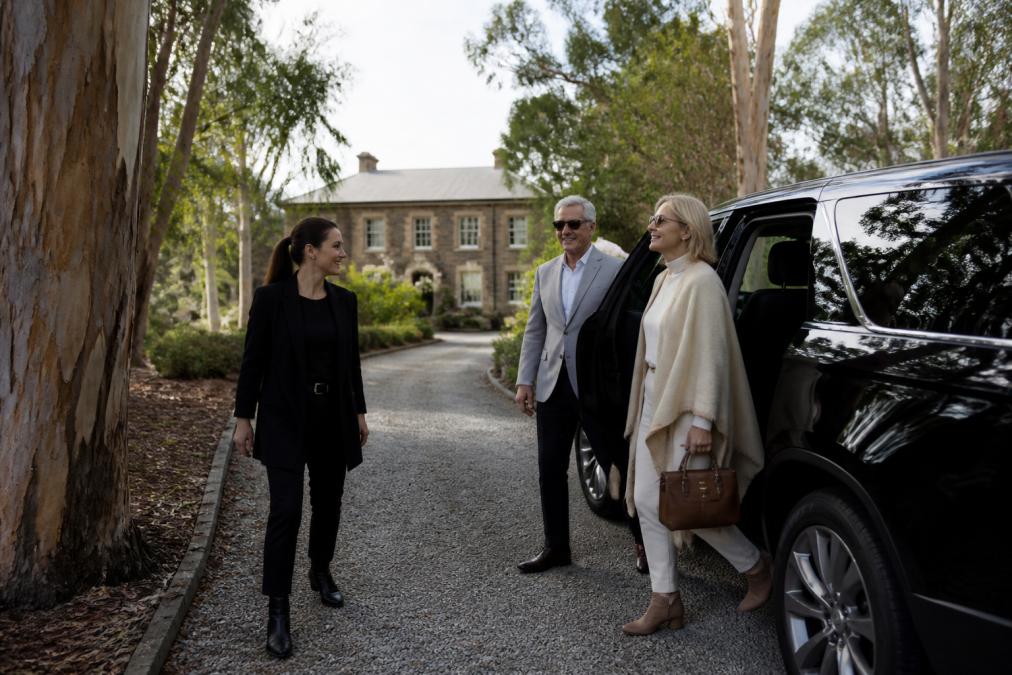
Luxury private tours Tasmania travellers book tend to share three traits: a dedicated guide, a spacious modern vehicle, and an itinerary shaped entirely around the guest. The difference is not just comfort, it is access. A private charter reaches boutique vineyards, quiet beaches and small producers that group coaches simply cannot visit.
Group Size and Passenger Capacity
Passenger capacity shapes what you can book. Small vehicles suit couples and solo travellers; larger people-movers and minibuses handle multi-generational families or groups of friends without splitting up. Confirm capacity before you commit, and ask whether luggage or mobility equipment counts toward it. For groups, a single private vehicle usually beats two separate cars on both cost and coordination.
Bespoke Travel Itineraries: How Customisation Works
Bespoke travel itineraries start with your list, not a template. A good operator asks what you want to see, how fast you like to move, and what you would rather skip, then builds the route around those answers.
Working With Your Existing Plans
Bring the itinerary you have already sketched from guidebooks and social media. A capable guide will work with it, tightening the logistics, swapping weak stops for stronger ones, and flagging anything that will not fit a single day. You do not need to start from scratch. The value is in the sequencing and local knowledge, not in discarding your plans.
Pricing and Inclusions: What to Expect
Private day tour pricing is not a single number, it is a formula. Most operators build a quote from four variables: vehicle class, hours booked, distance travelled and inclusions. Understanding how those variables interact is the difference between a fair quote and an inflated one.
How the Quote Is Actually Built
A typical private day tour quote combines:
- Base charter fee, covers the vehicle and guide for the booked window (usually 8-10 hours for a full day, 3-5 for a half day).
- Per-kilometre or per-region loading, longer drives (for example, a full loop of the east coast) cost more than a compact city-and-coastline route.
- Inclusions, entry fees, tasting charges, national park passes, meals and any pre-booked experiences.
- Group size multiplier, a larger vehicle for 7-11 guests costs more than a sedan or SUV for 1-4, but the per-person cost usually falls.
Ask for the quote broken into those four lines.
What Should Be Included, and What Usually Is Not
A well-built private day tour quote normally includes the vehicle, a professional guide, fuel, and public liability cover. It may or may not include:
- National park entry fees (some parks charge per vehicle; others per person) (Park passes and entry fees)
- Cellar door tasting charges, which vary by producer
- Lunch, morning tea and any beverage stops
- Optional add-ons such as a wildlife cruise, a distillery tour or a scenic flight
Budget-Conscious Private Tour Hacks
A few practical levers bring the per-person cost down without losing the private format:
- Fill the vehicle. A private charter is priced per vehicle, not per head. Four guests in an SUV pay roughly a quarter each of what a solo traveller pays for the same day.
- Book a half day. A 4-hour private excursion covers a compact region, a city heritage walk plus one cellar door, for example, at a fraction of a full-day rate.
- Stay in one region. Distance is a cost driver. A single-region itinerary (one wine trail, one national park) is cheaper than a multi-region dash.
- Travel shoulder season. Demand-based pricing means mid-week and outside peak summer often costs less for the same vehicle and guide.
- Share with another household.
Ask whether the operator offers a half-day rate, a mid-week rate or a multi-day discount if you are booking more than one private day.
Red Flags in a Private Tour Quote
- A flat per-person price with no vehicle or hour detail
- No written inclusions list
- A quote that changes materially after you name your stops
- No cancellation policy stated before deposit
A written quote that lists vehicle class, hours, distance allowance, inclusions and exclusions is the baseline.
Sustainable and Eco-Certified Tour Operators
Sustainability is a fair question to raise when you book. Ask whether an operator holds eco-certification, how they manage waste on tour, and whether they work with local producers and businesses. Smaller private vehicles generally carry a lighter footprint per guest than full coaches, and operators who partner with local vineyards, guides and makers keep more of the tourism spend in the region.
Seasonal Tips and Weather Planning
Tasmania’s climate is famously changeable, four seasons in a day is not a cliché here, it is a planning constraint. For a private day tour, that volatility is actually an advantage: your guide can reroute around weather in real time, something no coach group can do. But you still need to pack and plan for it.
What Each Season Actually Delivers
- Summer (December-February): Long daylight hours (up to around 15 hours in Hobart at the peak) support full-day coastal, wine and national park routes. Book early, this is peak demand for private vehicles.
- Autumn (March-May): Calm, clear days and vineyard colour make this the strongest season for wine trail itineraries. Mornings cool quickly; layers matter.
- Winter (June-August): Shorter days favour heritage towns, cellar doors, distilleries and compact scenic drives. Snow is possible in the highlands and on some alpine roads, which can close routes without notice.
- Spring (September-November): The most variable season. A morning of sun can turn to horizontal rain by lunch. Build flexibility into the itinerary and keep a wet-weather backup stop in mind.
A Real-Time Packing Framework
Rather than a generic list, pack against the day’s actual forecast and route. Use this decision framework the night before:
| If the forecast shows… | Pack this | Adjust the route by… |
|---|---|---|
| Rain and wind | Waterproof shell, dry bag for electronics, spare socks | Prioritising indoor stops (cellar doors, museums, distilleries) |
| Clear and cold | Thermal base layer, beanie, gloves | Booking a longer coastal or lookout drive while visibility is good |
| Warm and still | Sunscreen, hat, insect repellent | Adding a bushwalk or beach stop |
| Changeable (most common) | All of the above, in a daypack | Keeping one flexible slot in the itinerary |
How Your Guide Uses Weather in Real Time
A private guide monitors the forecast through the day and re-sequences stops accordingly. Common patterns:
- Front coming through at midday? Move the outdoor stop to the morning and shift the cellar door or museum to the afternoon.
- Clear window opening over a lookout? Take it, even if it means reordering the day.
- Road closure in the highlands? Reroute to a lower-elevation alternative rather than cancelling the day.
The single biggest weather mistake on a private day tour is over-scheduling. Leave one flexible slot so your guide can swap in the right stop for the conditions you actually get.
Seasonal Booking Notes
Peak summer and the autumn wine season fill private vehicles fastest, book weeks ahead if your dates are fixed. Winter and early spring offer more availability and often better value, with the trade-off of shorter daylight hours. If your must-see list includes a highland route or an alpine walk, check road and track conditions the day before and have a lower-altitude backup ready.
Frequently Asked Questions
What are the benefits of booking a private day tour?
Private day tours give you control over pace, stops and timing that group coaches cannot match. You avoid waiting for 40 other passengers, can linger at a cellar door or wildlife spotting point, and your local guide adjusts the plan as the day unfolds. For multi-generational groups or travellers with specific interests like culinary or wilderness experiences, the flexibility alone justifies the difference.
Can I customise a private day tour itinerary?
Yes. Bespoke travel itineraries are built around your interests, whether that means boutique vineyards, national parks, heritage streets or scenic coastline. You can supply a rough plan from guidebooks and have it refined, or start from scratch. A good operator confirms timings, driving distances and opening hours before the day so nothing feels rushed.
Are private tours suitable for families with young children?
They suit families well because you set the rhythm. Stops can be shortened, meal times moved and rest breaks added without disrupting anyone else. Spacious modern vehicles accommodate prams, capsules and grandparents comfortably. Tell the operator ages and energy levels in advance so the itinerary balances short walks, wildlife encounters and downtime.
What should I look for when choosing a private tour operator?
Check that the operator uses local guides with genuine regional knowledge, confirms vehicle capacity for your group, and offers a clear cancellation and contingency policy. Ask how they handle weather changes and whether they hold relevant tourism accreditation. Pricing should be transparent about what is included, such as entry fees, tastings and meals, so there are no surprises on the day.


Experiences
Book a Tour
Plan your tailored Tasmanian journey with ease—reserve your private tour today.


