
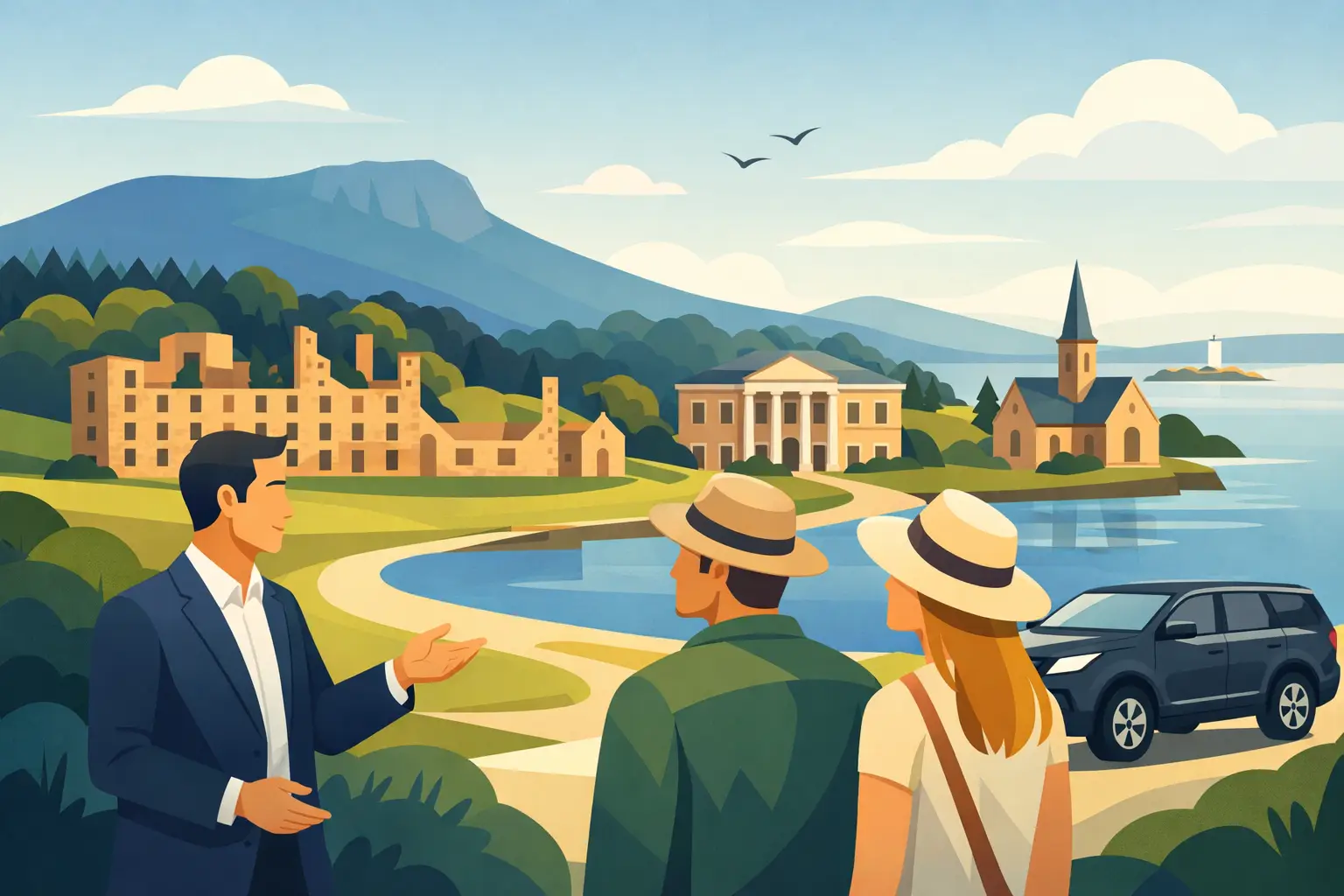
There is a marked difference between seeing a heritage site and being properly introduced to it. A well-crafted Tasmania heritage private tour is not simply a day of old buildings and historic dates. It is a chance to understand how Tasmania’s convict past, maritime trade, colonial architecture, Aboriginal history, and rural estates still shape the island’s character today – all at a pace that feels considered rather than rushed.
For travelers who value privacy, comfort, and substance, heritage touring works best when it is personal. Tasmania is layered, and those layers are easy to miss on a large coach itinerary built for efficiency. The right private experience gives you time to linger in sandstone streets, ask better questions, stop for lunch somewhere memorable, and connect the broader story of the island to the places directly in front of you.
Why choose a Tasmania heritage private tour
Heritage travel has a tendency to become either overly academic or disappointingly superficial. The private format avoids both. With a dedicated local guide and luxury transport, the experience can be shaped around what interests you most, whether that is convict history, colonial townships, grand homesteads, maritime stories, or Tasmania’s more complex cultural legacy.
That flexibility matters. Some guests want a full day centered on Port Arthur and the Tasman Peninsula. Others are drawn to Richmond’s Georgian streetscape, country estates in the Midlands, or lesser-known sites where the history feels quieter but no less compelling. A private tour allows room for those preferences, as well as the practical details that make a day feel effortless – door-to-door pickup, a more relaxed schedule, and the comfort of traveling without strangers.
For many discerning visitors, privacy is not about exclusion for its own sake. It is about quality. You hear the guide clearly. You move at your own rhythm. If a place deserves an extra half hour, you can take it. If you would rather pair a historic stop with a vineyard lunch or a coastal detour, that can be arranged with ease.
What makes Tasmania’s heritage so distinctive
Tasmania’s history is unusually vivid because so much of it remains physically present. In Hobart and beyond, heritage is not tucked away behind glass. It lives in warehouses, churches, bridges, villages, farmhouses, ports, and penal sites. You can read it in the stonework, in the street layout, in the names on old buildings, and in the way isolated settlements developed around harsh landscapes and practical necessity.
The island’s convict era is often the starting point, and understandably so. It is central to Tasmania’s colonial story, and places such as Port Arthur leave a lasting impression. Yet heritage here is broader than the penal narrative. There are stories of industry, migration, agriculture, shipping, governance, and craftsmanship. There is also the essential and continuing history of Tasmania’s Aboriginal people, which deserves care, context, and respect rather than a passing mention.
That is part of what makes a thoughtful private tour valuable. The best heritage experiences do not flatten the past into a single storyline. They acknowledge beauty and brutality, ambition and hardship, preservation and loss. Tasmania rewards that more nuanced approach.
Tasmania heritage private tour highlights worth considering
For first-time visitors, Port Arthur often sits high on the list, and for good reason. It is one of Australia’s most significant heritage sites, with dramatic ruins, a powerful setting, and a history that is both confronting and fascinating. But even here, the experience varies enormously depending on how you arrive and how much context you are given. In a private setting, the day can include scenic stops along the Tasman Peninsula, time to reflect rather than hurry, and a guide who can frame the site within the broader history of Van Diemen’s Land.
Richmond offers a different mood altogether. It is smaller, gentler, and visually charming, with its well-preserved village atmosphere, Georgian architecture, and Australia’s oldest stone bridge. On paper, it can look like a quick stop. In practice, it rewards a slower visit, especially for travelers who enjoy architecture, local stories, and a polished lunch or tasting woven into the day.
The Midlands also deserve attention, particularly for guests interested in early colonial settlement and rural estates. Towns such as Oatlands and Ross reveal another side of Tasmania’s heritage – elegant but practical, shaped by farming, transportation routes, and civic ambition. These are places where a knowledgeable guide makes all the difference, pointing out details and histories that most visitors would otherwise drive straight past.
Hobart itself should not be overlooked. The city’s waterfront, old warehouses, historic precincts, and enduring maritime identity provide a strong foundation for a heritage-focused day. Paired with Battery Point, Salamanca, or nearby estates, Hobart can deliver a sophisticated heritage experience without requiring a long drive.
The advantage of a private guide over a standard tour
A heritage destination can be beautiful on its own. What elevates it is interpretation. Dates matter less than meaning, and meaning is exactly what a skilled local guide provides.
On a standard group tour, the narrative has to fit the group. It is often broad, simplified, and constrained by time. On a private tour, the guide can respond to your interests in real time. If you are curious about architecture, you can go deeper. If you want more social history and less military detail, the day can lean that way. If a family member prefers gentler walking or more comfort breaks, the itinerary can accommodate that without fuss.
There is also the simple matter of atmosphere. Heritage sites ask for a different tempo than adventure touring. They benefit from calm travel, comfortable seating, and the sense that nothing is being forced. Arriving in a premium vehicle, avoiding the mechanics of large-group logistics, and having your day tailored to your pace changes the feel of the experience from sightseeing to genuine hosting.
How to plan the right heritage experience
The best heritage tour begins with a clear sense of what you want the day to feel like. Not every guest wants the same balance. Some prefer a deeply historical itinerary with several significant stops. Others want heritage as the anchor, with food, wine, gardens, or coastal scenery included to create a fuller Tasmanian day.
That is where private touring becomes especially appealing. A couple celebrating an anniversary may want a refined heritage journey with a long lunch and time for photographs. A multigenerational family may want easier walking, shorter site visits, and a mix of history and scenery to keep everyone engaged. Cruise visitors may need a highly polished day that delivers depth without any risk of timing issues.
It also helps to think seasonally. Tasmania’s heritage sites are rewarding year-round, but the tone changes. Summer brings longer days and busier attractions. Autumn can be particularly beautiful in historic villages and country districts. Winter adds mood and quiet, which suits some heritage experiences remarkably well. Spring offers gardens, fresh light, and a sense of renewal around old stone towns.
If your time is limited, it is usually better to do fewer places well. Trying to cover too much can dilute the experience. One substantial site, one beautifully preserved township, and one memorable lunch often create a stronger day than a rushed sequence of stops.
Luxury and history are not at odds
Some travelers assume heritage touring must be earnest, dusty, or overly formal. In Tasmania, it can be deeply comfortable. Luxury in this context is not about excess. It is about being looked after properly while engaging with places that deserve time and care.
That means thoughtful route planning, elegant transport, insider recommendations, and a guide who understands both the destination and the expectations of premium travelers. It can mean pairing a convict site with a private tasting, or balancing a morning of serious history with an afternoon drive through spectacular landscape. The day remains grounded in heritage, but it feels relaxed and beautifully paced.
This is where a bespoke operator such as VIP Tassie Experiences naturally stands apart. The value is not only in what you see, but in how the day is curated around you – privately, comfortably, and with the kind of local insight that turns historical touring into something far more memorable.
Is a heritage private tour right for you?
If you enjoy context, craftsmanship, architecture, and stories with complexity, the answer is likely yes. If you dislike being hurried, dislike crowded coaches, or want the freedom to shape your day around your own interests, the answer is even clearer.
A Tasmania heritage private tour is especially well suited to travelers who appreciate travel as a form of connection rather than collection. You are not there to tick off landmarks. You are there to understand why these places matter, how they relate to one another, and what they reveal about Tasmania itself.
The finest heritage days tend to stay with people for a simple reason: they feel personal. A quiet church in the countryside, a conversation about the people who built a township, the texture of old sandstone in changing light, a lunch stop chosen because it suits your taste rather than the group schedule – these are the details that turn a historical outing into an unforgettable journey.
If Tasmania is on your list, give its past the time and setting it deserves. The island tells its story best when you are not being rushed past it.


Experiences
Book a Tour
Plan your tailored Tasmanian journey with ease—reserve your private tour today.


