
Table of Contents
- Why Tasmania Culinary Experiences for Couples Beat Anywhere Else
- Seasonal Produce and Harvest Experiences Worth Planning Around
- Private Food and Wine Tours: What Couples Actually Get
- Romantic Dining Hobart: Intimate Tables and Chef-Led Menus
- Farm-to-Table and Paddock-to-Plate Experiences for Two
- Budget-Friendly vs Luxury: Pairing Your Culinary Trip to Your Wallet
- Logistics for Couples: Transport, Timing, and Stress-Free Planning
- How to Book a Bespoke Culinary Itinerary That Fits You Both
- Frequently Asked Questions
Last Updated: October 4, 2026
Why Tasmania Culinary Experiences for Couples Beat Anywhere Else
Tasmania culinary experiences for couples pack more into a long weekend than most destinations manage in a fortnight.
This guide from VIP Tassie Experiences is built for couples who want the island’s food and wine without a rigid coach schedule. We plan private days around what you both actually enjoy.
The island’s advantage is scale. A morning at a vineyard, an afternoon at a distillery, and a seafood dinner by the coast can all happen in one unhurried day. Wine Australia’s regional wine tourism overview notes how cellar door visits have become a central part of regional travel, and Tasmania’s compact geography makes that easier here than almost anywhere on the mainland.
Below, we break down the experiences worth building a trip around.
Seasonal Produce and Harvest Experiences Worth Planning Around
Timing your visit to the growing season changes everything. Many couples find that a harvest-time trip delivers the most memorable meals, because kitchens cook with produce picked that week.
Summer brings berries and stone fruit; autumn is apple and pear season, with many orchards opening for pick-your-own.
- Summer: berries, cherries, coastal seafood at its peak
- Autumn: apples, pears, mushrooms, harvest festivals
- Winter: truffles, hearty root vegetables, warming degustations
If a specific harvest experience matters to you, say so when you plan. That single detail shapes which regions and days make sense.
Private Food and Wine Tours: What Couples Actually Get
A private food and wine tour is a day built around your interests, not a fixed route shared with strangers. For couples, the appeal is simple: your own pace, your own stops, and no waiting on a group.
What most guides miss is that the value is not the vehicle or the itinerary on paper. A good local guide knows which cellar door has the winemaker in that afternoon and which restaurant will hold a quiet corner table.
Tourism Australia’s guide to food and wine experiences highlights how regional producers increasingly welcome small, personal visits rather than large groups. That shift suits couples perfectly.
Cellar Door Tastings and Tasting Flights
A tasting flight lets you compare several wines side by side, usually with the story behind each. Tasmania’s cool-climate specialties, sparkling wines, pinot noir, and aromatic whites, reward this format.
The insider tip: ask for the flight the venue is proudest of, not the standard list. Smaller cellar doors often pour something special for visitors who show genuine interest.
Distillery and Brewery Stops for Couples Who Want Variety
Not every couple agrees on wine. Distilleries and breweries solve that. One partner can work through a whisky flight while the other samples a seasonal ale, and both leave happy.
Tasmania’s distilling scene has grown quickly, and many venues pair tastings with a small plate of local produce. Build these stops between wine visits to break up the day and keep energy levels up.
Romantic Dining Hobart: Intimate Tables and Chef-Led Menus
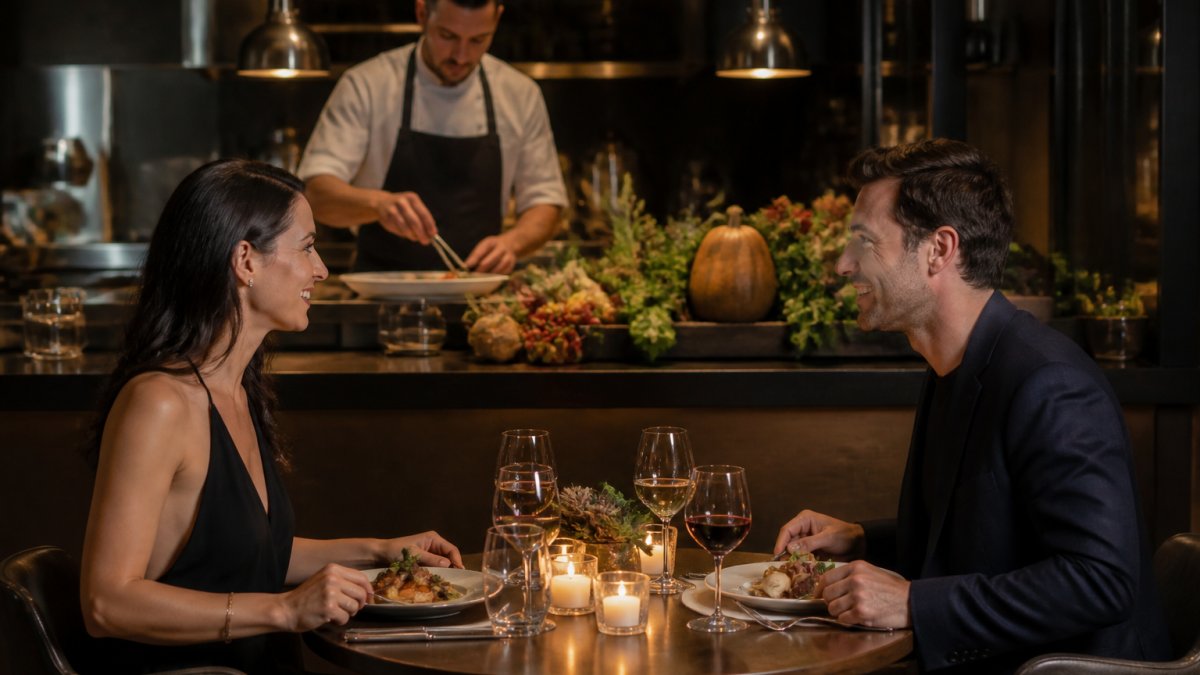
Romantic dining in Hobart rewards planning, because the city’s most intimate rooms are also its smallest. A chef-led menu, a fixed sequence chosen by the kitchen that day, turns dinner into an event rather than a decision, and for couples that removal of choice is often the whole appeal.
A Romance Factor, Not Just a Food Score
Most reviews rate food and service. For couples, three other things matter more, and they are worth scoring yourself before you book:
- Table spacing. Rooms where tables sit close together feel buzzy but not private. Ask for a two-top against a wall or in an alcove rather than the middle of the floor.
- Noise. A waterfront view often comes with a hard, loud room. If conversation is the point, a quiet corner beats a harbour outlook every time.
- Pace. A degustation that runs three hours is romantic; one that runs five is a endurance test. Ask how long the sitting typically takes.
Booking Mechanics That Actually Matter
Hobart’s best small rooms fill weeks ahead in peak season, and the most romantic slots, early evening, corner tables, chef’s counter seats, go first. A few practical patterns:
- Book direct. Calling or emailing the venue lets you flag an anniversary, a dietary need or a seating preference in a way an online widget cannot.
- Ask about the counter. Chef’s counter or kitchen-adjacent seating is often the most intimate option in a small restaurant, and it is frequently not bookable online.
- Target a mid-week night. Tuesday to Thursday sittings are quieter, easier to secure and often more relaxed for staff, which shows in the service.
Pairing Dinner With the Rest of the Day
A degustation is a poor fit after a heavy tasting day. The couples who enjoy these meals most tend to keep the daytime light, a single cellar door, a walk, a long lunch, and arrive at dinner unhurried and hungry. If you are building a private day, tell your planner that dinner is the centrepiece and let the daytime bend around it rather than the reverse.
If you want a specific table or a specific night, say so at the planning stage, not on the day. Small venues hold their best seats for direct bookings made well in advance.
Farm-to-Table and Paddock-to-Plate Experiences for Two
Farm-to-table dining means the kitchen sources directly from nearby growers, often on the same day. On a couple’s trip, the best version of this is a long lunch at a producer’s own table.
Many farms now run intimate lunches where you eat what was harvested that morning, sometimes within sight of the paddock. These are unhurried by design: two or three courses, local wine, and no rush to turn the table.
When you book a producer lunch, ask whether the menu is fixed or flexible. The best ones adjust for dietary needs if you flag them when booking, not on the day.
Budget-Friendly vs Luxury: Pairing Your Culinary Trip to Your Wallet
Almost no ranking guide tells couples how to actually split a culinary trip between splurge and save. The honest answer is that the food itself is rarely the expensive part, the private logistics around it are. What you buy with money is time, access and the removal of driving.
The Real Cost Drivers
Four things move a couple’s culinary budget more than anything else:
- Private transport and guiding. A private vehicle and guide for a day is the single largest line item, and it is also the thing that most changes how the day feels. It is the first place to spend if you want a stress-free trip.
- Tasting depth. A standard cellar door flight is inexpensive; a curated flight with the winemaker, or a seated masterclass, costs more and delivers a different experience rather than simply ‘better’ wine.
- Dining format. A set lunch is usually the best value in a region. A chef-led degustation dinner is the splurge, and it is worth doing once rather than every night.
A Practical Splurge-and-Save Pattern
A pattern many couples settle into, and one that works well over a long weekend:
- One private guided day. Spend here. Let a local guide handle the driving, the timing and the bookings for the day that matters most.
- One self-drive day. Save here. Pick a compact region, keep stops close together, and book a driver or a shared shuttle for any stretch with multiple tastings.
- One long producer lunch. This is usually the best value-for-memory meal of the trip, two or three courses, local wine, no rush.
- One chef-led dinner. The splurge. Book it for the night you want to remember, not the night you arrive exhausted.
- Casual eats the rest of the time. Bakeries, markets, coastal fish and chips and providores do a lot of the heavy lifting on a couple’s trip, and they are where you meet locals.
Where to Save Without Feeling It
- Self-drive on quiet days. If you are not tasting, driving yourself is fine and frees budget for the days that matter.
- Share a platter, not two mains. Regional venues often serve generous produce boards that suit two people perfectly.
- Buy bottles at the cellar door. Taking wine home is usually better value than drinking the same wine in a restaurant.
- Travel in shoulder season. Accommodation and some experiences soften outside peak weeks, and the produce calendar still delivers.
Where Not to Cut Corners
Do not cut the booking lead time either, the best small venues and the best tables go to couples who planned ahead, not to those who turned up.
Spend on access and logistics. One private day, one long lunch and one chef-led dinner will beat a week of scattered bookings for most couples.
Logistics for Couples: Transport, Timing, and Stress-Free Planning
Transport is where most couple’s itineraries fall apart. The island’s best food and wine sits outside the cities, and distances between regions are longer than they look on a map.
Plan no more than two regions per day. Group your stops geographically so you are not doubling back, and leave buffer time between bookings.
- Book tastings and dinners ahead in peak season
- Keep one flexible day with no fixed bookings
- Choose a driver for any multi-tasting day
- Confirm opening hours directly; small venues change them often
This is exactly where a private, local-led day tour earns its place. Your guide handles the driving, the timing, and the bookings, so the day flows instead of being managed.
How to Book a Bespoke Culinary Itinerary That Fits You Both
Booking a bespoke itinerary starts with a conversation, not a template. Tell the planner what you love, what you would rather skip, and how fast you like to move.
A practical framework for the conversation:
- Name your priorities. Pick two or three must-dos: a specific winery, a distillery, a long lunch.
- State your pace. Do you want three stops a day or one?
- Flag dietary needs and mobility. Early notice keeps the day smooth.
- Set your budget band. This decides how many private elements you add.
- Share what you have already planned. A good planner works with your existing ideas, not against them.
At VIP Tassie Experiences, we build private days around exactly this kind of brief. Our guides are locals who know which cellar door is worth the detour and which quiet table suits a couple.
Frequently Asked Questions
What are some unique dining experiences in Tasmania for couples?
Couples can try degustation menus at chef-led restaurants, private cellar door tastings with a tasting flight of cool-climate wines, farm-to-table lunches at working farms, and seafood dinners overlooking the coast. Many venues offer intimate settings for two, and a private tour operator can arrange bespoke stops that match your pace and preferences, including artisan producers and distillery visits that larger group tours skip.
Are there private vineyard tours available for couples?
Yes. Private food and wine tours let couples visit cellar doors on their own schedule, often with the winemaker or a cellar door host. You can combine vineyard visits with distillery or brewery stops, and your guide handles transport so neither of you has to drive. Operators like VIP Tassie Experiences build the itinerary around your interests, whether that is a single region or several stops across a day.
How can I book a private, bespoke culinary tour for two?
Contact a private tour operator directly and share what you enjoy: wine styles, dietary needs, preferred pace, and any must-see producers. They will design a tailored itinerary and confirm availability. Booking ahead is wise in peak season, especially for harvest-time visits and weekend dining.
What should couples budget for a culinary trip to Tasmania?
Costs vary widely depending on whether you choose self-guided tastings or a private guided tour, and whether you dine at casual eateries or fine-dining restaurants. A private tour bundles transport, local knowledge, and access to producers, which can replace several separate bookings. For current pricing, check the operator’s website or request a personalised quote, as rates change with season and itinerary length.
Planning a culinary trip for two means juggling seasons, bookings, transport, and the small details that make a day feel effortless. VIP Tassie Experiences takes that off your plate with private, local-led day tours, tailored itineraries built around your interests, and comfortable modern vehicles that keep the day unhurried. Get started with VIP Tassie Experiences and taste the island at your own pace.


Experiences
Book a Tour
Plan your tailored Tasmanian journey with ease—reserve your private tour today.


