
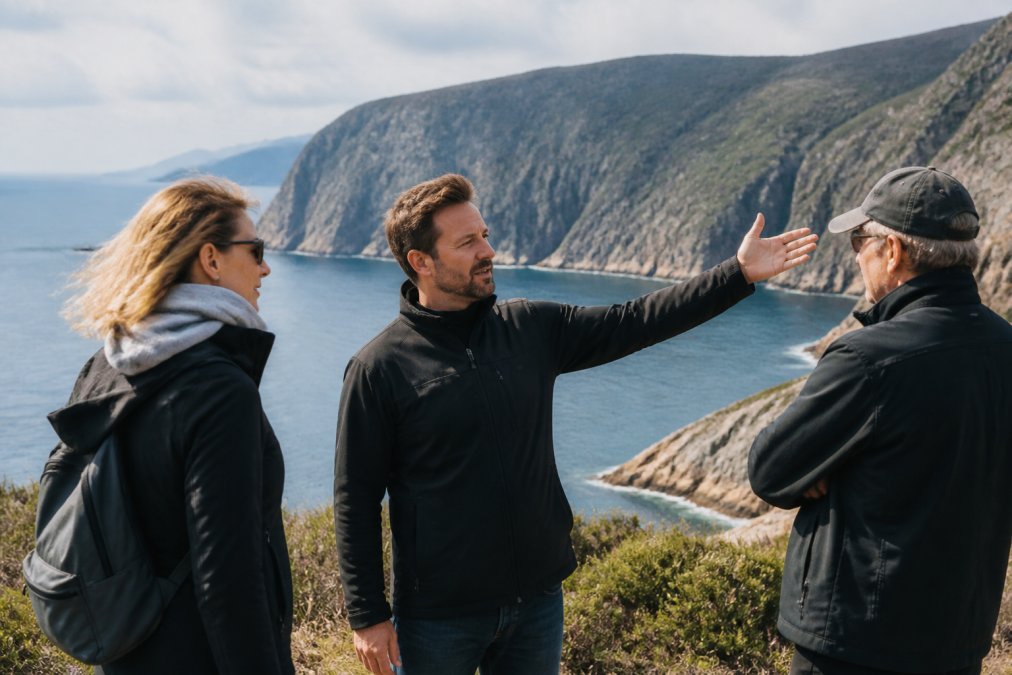
Table of Contents
- Why Local Tasmania Guides Change the Way You Travel
- The Hidden Gem Advantage: Places No Guidebook Lists
- Private Day Tours Tasmania: Comfort, Pace, and Zero Crowds
- Bespoke Travel Experiences Built Around Your Interests
- Hidden Gems of Tasmania: What Local Guides Actually Know
- How Local Guides Support Communities and the Environment
- Wilderness Safety and Risk Management on Guided Tours
- What to Look for When Choosing a Local Guide
- Conclusion
- Frequently Asked Questions
Last Updated: September 20, 2026
Why Local Tasmania Guides Change the Way You Travel
The benefits of hiring local Tasmania guides start with a simple truth: the island rewards people who know it. A local guide reads conditions, timing and access in a way no itinerary downloaded at home can match.
The Hidden Gem Advantage: Places No Guidebook Lists
The best-known lookouts and walks fill up early, and the crowds follow the same handful of pins on a map. Local guides work from a different list entirely, built over years of exploring on their own time.
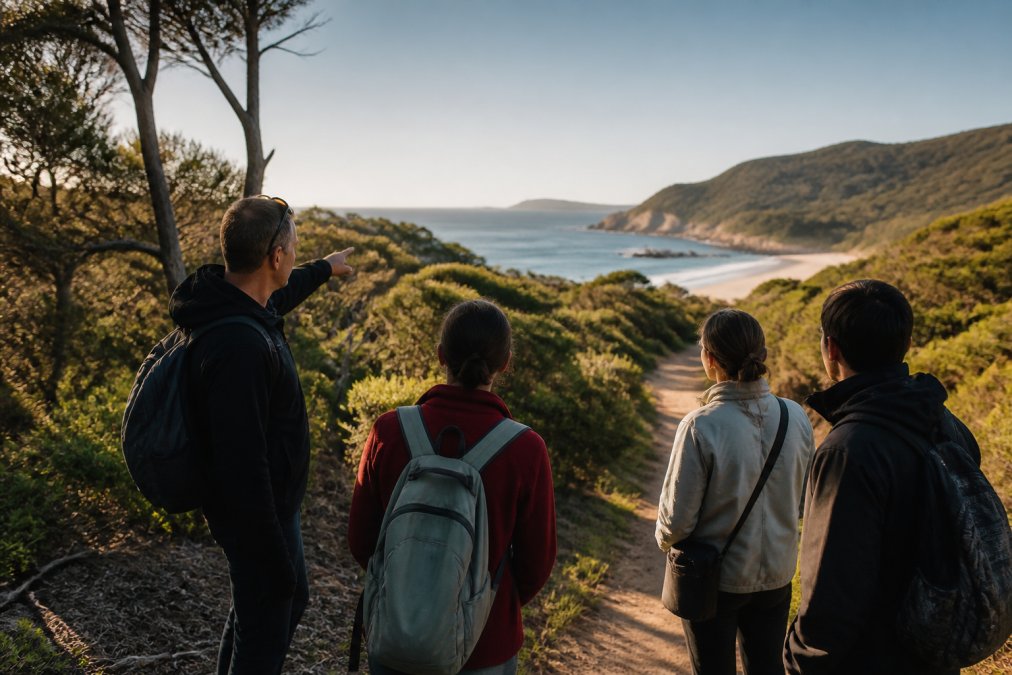
Why the Knowledge Cannot Be Copied
A guidebook has to be written for everyone, so it can only recommend places that can handle everyone. That rules out most of the good stuff. A local guide has no such constraint, because they are working with one small group at a time and can judge whether a spot suits the people in front of them.
What This Actually Looks Like on a Day Out
Concrete examples of the hidden-gem advantage, in the kinds of places a local guide can take you:
- A coastal walk with no signage. Same coastline as the famous lookout, a fraction of the people, and often a better view because you are looking back at the headland rather than standing on it.
- A cellar door or farm gate that does not advertise. Small producers who sell direct and rely on word of mouth rather than a booking platform.
- A lunch stop timed around the tour-bus schedule. The same town, the same food, but you arrive after the coaches have left and the kitchen is calm again.
- A short detour that turns a drive into a day. A waterfall, a historic bridge, a picnic spot, none of which appear on a route planner because they add time a fixed itinerary cannot spare.
- A wildlife spot at the right hour. Many animals are only visible at dawn or dusk, which is exactly when standard day tours are not running.
The Real Benefit Is Not the Secret Spot
It is worth being honest about what you are buying. The value is not a list of coordinates, you could probably find some of these places with enough research. The value is the judgement that comes with them: which hidden spot suits your group, which one is worth the drive today given the weather, and which one to skip because the track is too rough for the people in the vehicle.
Ask your guide what they would skip if it were their own trip. The answer usually reveals which stops on a standard route are there for logistics rather than for the experience, and which hidden alternatives they would slot in instead.
Private Day Tours Tasmania: Comfort, Pace, and Zero Crowds
Private day tours Tasmania travellers book through a local operator trade the bus timetable for your own schedule. The vehicle is yours, the stops are yours, and nobody is waiting on a microphone announcement to tell you when to be back.
How Private Tours Compare to Standard Bus Groups
The difference is not just comfort, it is what the day is built around.
| Feature | Private Local Tour | Standard Bus Group |
|---|---|---|
| Group size | Your party only | 20-50 travellers |
| Itinerary | Flexible, adjusted on the day | Fixed timetable |
| Pace | Set by you | Set by the slowest stop |
| Local knowledge | Guide lives in the region | Scripted commentary |
| Hidden stops | Common | Rare |
| Best for | Couples, families, small groups | Budget-focused travellers |
Bespoke Travel Experiences Built Around Your Interests
Bespoke travel experiences start with your interests, not a template. A wine-focused couple, a family with grandparents and young kids, and a solo photographer should not be handed the same day, and with a local operator they are not.
Custom Itineraries vs. Standardised Tour Packages
Custom itineraries are built around what you actually want to see, with the order and pace adjusted to suit your group. Standardised packages run the same route for everyone, which keeps costs down but leaves no room for the stops that would have made your trip.
Hidden Gems of Tasmania: What Local Guides Actually Know
What local guides actually know is not a secret list so much as a working understanding of the island: which roads flood after heavy rain, which bakery sells out by mid-morning, which walk suits a hot day versus a cool one.
How Local Guides Support Communities and the Environment
Money spent with a local operator stays in the region far more reliably than money spent with an outside company running a coach through town. The mechanism is straightforward: a local operator hires local guides, fuels vehicles locally, buys lunch from local producers, and pays local permits and levies. An interstate or offshore operator running the same route extracts most of the margin and sends it home.
What Environmental Stewardship Looks Like in Practice
Most visitors never see the decisions that keep a site intact. A local guide makes them all day, usually without announcing them:
- Track rotation. When one walking route is showing wear, guides shift groups to an alternative and let the first one recover. A fixed itinerary cannot do this.
- Wildlife distance. Guides know where a wombat burrow, a penguin colony or a nesting site sits, and they hold the group back rather than let people crowd it for a photo. A self-guided visitor has no way of knowing they are too close.
- Biosecurity hygiene. Boot and gear cleaning before entering some areas is a standard local practice, not an optional extra. It limits the spread of soil-borne pathogens such as Phytophthora cinnamomi, a root-rot disease that has damaged vegetation across parts of the island.
- Leave-no-trace discipline. Rubbish carried out, gates left as found, no shortcuts through regenerating bush.
- Seasonal restraint. Some spots are simply not worth visiting at certain times of year, and a local guide will say so rather than tick the box.
Choosing a local guide is one of the few travel decisions where your money supports the community you are visiting and the environment you came to see, at the same time, and where the operator has a financial reason to keep both healthy.
The Trade-Off You Should Know About
Local stewardship is not free. A small local operator cannot match the per-head pricing of a large coach company, because a full bus spreads fuel, permits and wages across 40 or more passengers. A private local tour spreads the same costs across your party alone. That is the honest reason private local tours cost more per person, you are paying for the flexibility, the smaller footprint, and the fact that the money stays in the region rather than leaving it.
Wilderness Safety and Risk Management on Guided Tours
Wilderness safety is where local knowledge matters most, and where the gap between a guide and a self-planned day is widest. Weather on the island changes quickly, tracks close without warning, and phone coverage drops the moment you leave the main roads.
The most common mistake independent travellers make is underestimating how fast conditions change on a bushwalk. A track that is easy at midday can become dangerous within an hour if fog or rain rolls in, and there is often no phone signal to call for help.
What to Look for When Choosing a Local Guide
Choosing well comes down to a short checklist you can run before you book.
- The guide lives in the region and can name specific local spots, not just famous ones
- The operator holds current accreditation and insurance for guided tours
- Vehicles are modern, comfortable and suited to the terrain
- Itineraries are built around your interests, not a fixed route
- The guide asks about pace, mobility and dietary needs before the day
- Reviews mention flexibility and local knowledge, not just punctuality
- The operator can explain how they handle changes in weather or plans
Conclusion
The hardest part of planning a trip to the island is knowing which of the hundreds of options are actually worth your limited time. Local knowledge solves that problem, and it is not something you can download before you arrive.
Frequently Asked Questions
How does a local guide improve the quality of a private tour?
A local Tasmania guide brings regional expertise that no guidebook can replicate. They know which wineries are pouring their best vintage, which walking tracks suit your fitness level, and how to time visits around peak crowds. On private day tours Tasmania operators design, the guide also handles logistics, from bookings to road conditions, so you spend your time experiencing the island rather than planning it. That depth of destination knowledge translates directly into a smoother, more personalised visitor experience.
What unique insights can a local guide provide about regional history?
Local guides add storytelling to facts. They connect a convict-era ruin to the families who lived there, explain how island geography shaped settlement patterns, and point out local heritage that signage misses. Interpretive guiding turns a scenic stop into a story you remember. For travellers booking bespoke travel experiences, this narrative layer is often what separates a good day out from the one they talk about for years.
Are private local guides better than group bus tours?
For flexibility and personal attention, yes. Private day tours Tasmania style let you change plans mid-day, linger at a lookout, or skip a stop that does not interest you. Group bus tours run to a fixed schedule and often cover ground quickly. A private guide also manages risk on wilderness walks and can tailor the pace to children, grandparents, or solo travellers. The trade-off is cost, which depends on group size, duration, and itinerary. Book Your Tour for current pricing.
How do local guides help support the regional economy?
Guides who live in the region spend locally and recommend locally. They book cellar doors, cafes, and small attractions that might otherwise miss out on visitor spending. That community impact keeps money circulating through towns rather than flowing to distant head offices. Choosing a local operator also supports sustainable tourism, because guides have a direct stake in keeping the landscapes and local heritage they rely on in good condition for future visitors.


Experiences
Book a Tour
Plan your tailored Tasmanian journey with ease—reserve your private tour today.


