
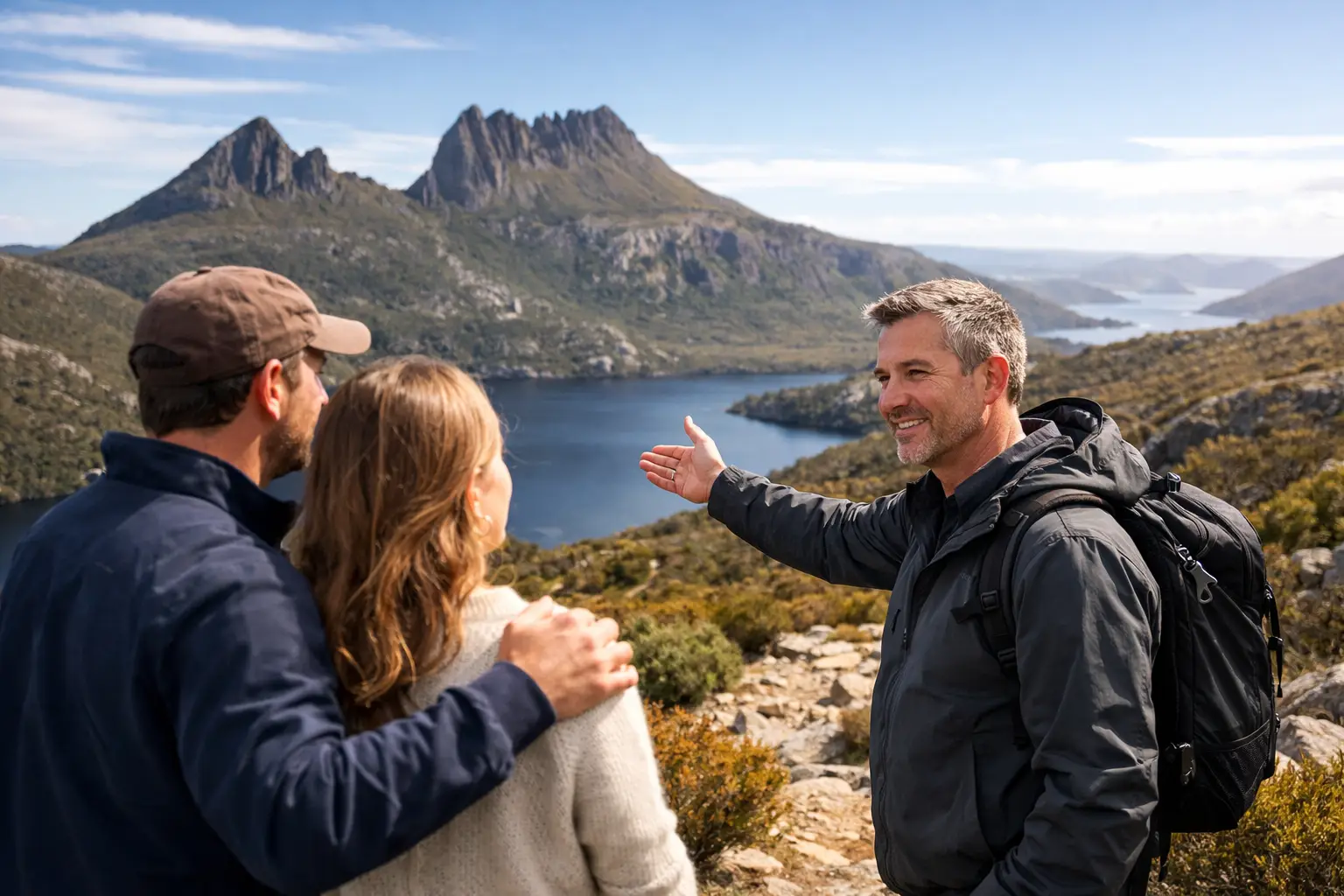
A late start over Hobart’s harbour, a vineyard table held for your arrival, a quiet lookout reached when the light is at its best – these are the details that change a holiday from pleasant to deeply memorable. When you choose a private Tasmania guide, you are not simply booking transport between attractions. You are choosing the person who will shape the rhythm, comfort and character of your time on the island.
For travellers who value privacy, thoughtful service and a genuine sense of place, the right guide makes Tasmania feel less like a list of stops and more like an invitation from a well-connected local. The decision deserves a little more consideration than comparing tour prices and departure times.
Start with the journey you actually want
Before assessing guides, decide what an exceptional day looks like to you. Tasmania rewards curiosity, but it is wonderfully varied. One couple may want a slow day among Coal River wineries and farmgate producers. Another may be drawn to Bruny Island’s wild coast, native wildlife and local flavours. A family might prefer a heritage walk, easy scenic stops and a lunch that suits every generation.
A considered private guide will begin with questions, not assumptions. They should want to know how you like to travel, what interests you, how much walking feels enjoyable, whether a special occasion is involved and what you would rather avoid. This conversation is where a tailored journey begins.
Be realistic about pace, too. A private day gives you freedom, but it cannot alter Tasmania’s distances. Trying to fit Freycinet, Port Arthur and the Huon Valley into one day from Hobart creates more windscreen time than meaningful experience. The most rewarding itineraries allow room for a lingering lunch, an unplanned photo stop or a conversation with a maker whose work captures your interest.
Choose a private Tasmania guide with local depth
Local knowledge is more than knowing the quickest route or the most photographed viewpoint. It is understanding when a beach is likely to be calm, which cellar door suits a particular palate, where the morning light falls across a valley, and which story gives a historic site its real texture.
Ask how long your guide has lived and worked in Tasmania, and how they build their itineraries. The strongest guides have established relationships with winemakers, chefs, growers, artists and small producers. Those relationships can create experiences that feel personal rather than processed: a tasting chosen around your preferences, a table in the right corner of a restaurant, or a detour to a little-known landscape that genuinely suits the day.
Depth also means cultural care. Tasmania’s Aboriginal history, colonial past and contemporary creative life deserve to be shared with accuracy and respect. A knowledgeable guide can bring context to the places you visit without turning the day into a lecture. The best storytelling is conversational, responsive and grounded in genuine affection for the island.
Look for judgement, not just information
An experienced guide knows when not to follow the original plan. Weather can move quickly across the island, seasonal opening hours can change, and an unexpectedly busy stop can alter the mood of a day. Flexibility is valuable only when it is guided by sound judgement.
Ask what happens if conditions are poor or a preferred venue is unavailable. A reassuring answer will include practical alternatives and a willingness to adjust, not a vague promise that everything will work out. Private travel should feel relaxed because someone capable is looking ahead.
Comfort is part of the experience
A premium private tour is not defined by a luxury vehicle alone, although a beautifully maintained Mercedes with generous space, climate control and easy access certainly makes a difference. Comfort is the cumulative effect of details: punctual collection from your accommodation, chilled water at hand, room for coats and purchases, unhurried transitions and a guide who notices when it is time for coffee, a break or a quieter stretch of road.
If you are travelling as a couple, with friends or with family members of different ages, ask about the vehicle that will be used for your party. Confirm passenger capacity, luggage space and accessibility needs rather than assuming. It is also sensible to discuss child seats, mobility considerations and dietary requirements early. A private itinerary can usually accommodate these needs well, provided they are known in advance.
There is a trade-off worth recognising. The smallest, most intimate vehicle may be perfect for two guests but unsuitable for a group that wants substantial luggage room or easier entry and exit. The right choice is the one that lets everyone settle in comfortably for the full day.
Understand what is genuinely tailored
Some private tours follow a fixed route with the benefit of exclusive transport. Others are built around you from the ground up. Both can be enjoyable, but they offer different levels of personalisation.
A curated itinerary is an excellent choice when you are short on planning time and the route already matches your interests. It brings the confidence of a well-tested day, with considered timing and trusted stops. A bespoke itinerary is particularly worthwhile for milestone celebrations, return visitors, special food and wine interests, photography-focused days or travellers who have a very particular vision.
When comparing options, ask what can be changed. Can lunch be selected according to your preferences? Is there time to linger at a winery you love? Can the guide recommend an alternative if you wake to rain? Are admission fees, tastings and meals included, or quoted separately? Clear inclusions make it easier to compare value fairly.
The lowest quote is rarely the whole story. Private touring reflects planning time, guide expertise, vehicle quality, local relationships and the attention required to make a day feel effortless. A higher rate may include meaningful extras and better pacing, while a lower rate may leave more arrangements to you. Consider the overall experience you are buying, not only the number of hours on the road.
Read reviews for the details that matter
Guest feedback can reveal far more than a star rating. Look for recurring comments about a guide’s warmth, knowledge, flexibility and ability to make people feel at ease. Notice whether past guests mention thoughtful adjustments, excellent dining recommendations, hidden places or a day that suited different personalities in the same group.
It is also useful to see whether reviews describe the type of journey you want. A guide praised for high-energy hiking adventures may not be the ideal match for a leisurely culinary escape, and vice versa. Seek evidence that the operator understands your preferred style of travel.
Personal communication before booking is just as revealing. A considered response to your enquiry, with useful questions and realistic suggestions, is often a strong indication of the care you will receive on the day. At VIP Tassie Experiences, planning begins with that personal exchange, so each private journey is shaped around the guests rather than a standard coach-tour timetable.
Ask the questions that protect your day
Before confirming, make sure you understand who will guide you, how long the experience runs, where collection is available and what the cancellation or weather policy allows. If a particular guide is important to you, ask whether they will be your host for the day rather than assuming.
For food and wine experiences, clarify whether tastings and lunch reservations are arranged on your behalf. For cruise visitors, check collection timing carefully and allow a sensible buffer for the ship’s schedule. For multi-day journeys, ask how each day will connect to your accommodation and whether the itinerary can evolve as you discover new interests along the way.
These are not fussy questions. They are the practical foundations of a holiday that feels calm and well cared for.
Give the day room to become your own
The finest private journeys have structure without feeling rigid. You may begin with a clear plan, then find yourself staying longer at a cellar door because the conversation is excellent, taking a coastal track because the view calls for it, or changing lunch plans after your guide shares a favourite local recommendation.
Choose a guide who can make that freedom feel easy. With the right local host, Tasmania does not need to be hurried. It can unfold at your pace, in comfort, with the quiet confidence that the day has been crafted for no one else but you.


Experiences
Book a Tour
Plan your tailored Tasmanian journey with ease—reserve your private tour today.


