
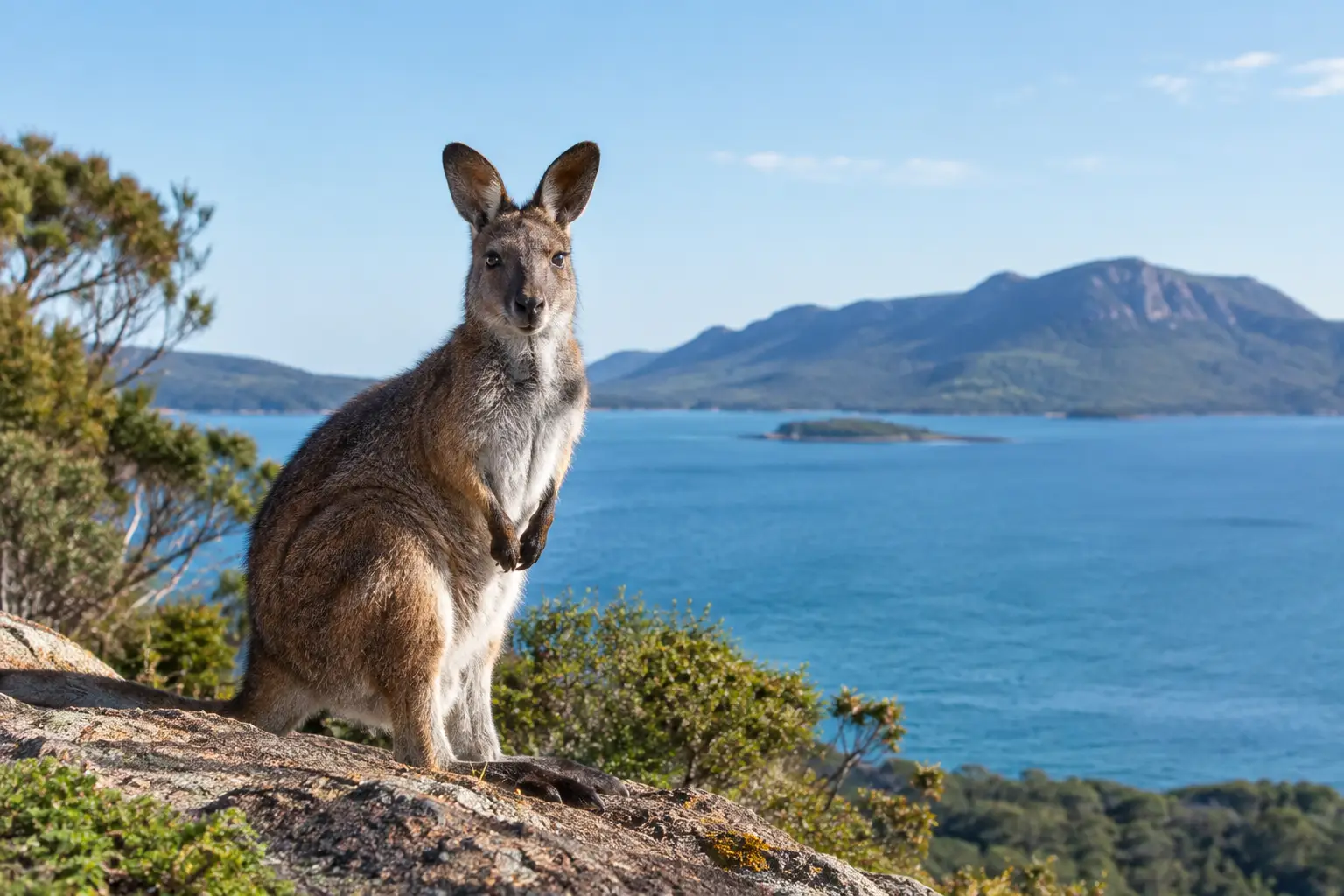
Maria Island can feel remarkably close to Hobart, yet the moment you step ashore at Darlington, its pace changes completely. This Maria Island wildlife guide is designed for travellers who would rather linger with a wombat in the grass than race between photo stops, pairing practical planning with the quiet pleasures that make the island so memorable.
There are no crowds of cars, no roadside cafés and no need to rush. Just open woodland, weathered sandstone, old convict-era buildings and an abundance of native animals going about their day. For a private, considered visit, that simplicity is precisely the appeal.
Why Maria Island feels different
Maria Island National Park is a rare combination of wildlife sanctuary, coastal escape and heritage landscape. The island is reached by ferry from Triabunna on Tasmania’s east coast, and the crossing itself is part of the experience: a short passage over Mercury Passage with the island’s mountainous spine rising ahead.
Once on the island, movement is on foot or by bicycle. This car-free setting creates a gentler kind of day. Wildlife is not framed by car windows or hurried from a distance. It appears naturally along the tracks, beside historic cottages and in the open paddocks around Darlington.
The trade-off is that Maria Island rewards guests who are happy to walk. A carefully paced itinerary matters, especially for visitors who want time for photography, a long lunch packed for the day, or simply the pleasure of sitting quietly while birds move through the trees. It is possible to see a great deal on a day trip, but not every walk belongs in every itinerary.
Maria Island wildlife guide: animals to look for
Wombats, pademelons and kangaroos
Common wombats are often the stars of a Maria Island visit. They can be seen grazing around Darlington and along the island’s grassy edges, sometimes at surprisingly close range. Their relaxed presence makes for wonderful photographs, but the most rewarding encounters happen when you allow them space and wait quietly rather than approaching for a closer shot.
Tasmanian pademelons are also common, particularly near scrub and woodland margins. They are smaller and more watchful than wombats, with a soft, quick movement that makes early morning and late afternoon especially rewarding times to look for them.
You may also see Forester kangaroos in open areas. These are Tasmania’s largest kangaroos, and their size can be striking against the island’s low grasslands and wide coastal skies. Bennett’s wallabies can appear in more sheltered country, though sightings are never something to promise or chase. Wildlife on Maria Island is wonderfully accessible, but it remains wild.
Cape Barren geese and birdlife
Cape Barren geese are among the island’s most distinctive residents. Large, pale-grey and wonderfully unbothered by human presence, they are frequently seen around Darlington and the paddocks nearby. Look for their pink legs and bright green-yellow beaks.
Birdwatchers have plenty to keep them occupied, even without turning the day into a checklist. Maria Island supports seabirds, forest birds and shorebirds, with species changing as you move between the settlement, woodland and coast. Superb fairy-wrens flick through low vegetation, while black swans and waterbirds may be seen around wetlands. Sea eagles are possible overhead, particularly along the coast.
Bring binoculars if birdlife is a priority, but do not spend the whole day looking down a lens. On Maria Island, some of the best wildlife moments arrive in the pauses between destinations.
Tasmanian devils and other elusive encounters
Tasmanian devils have been reintroduced to Maria Island as part of an important conservation program. They are primarily nocturnal, however, so a daytime visitor should view a devil sighting as a rare bonus rather than an expectation. The same is true of many smaller animals that remain largely hidden during the brighter hours.
Snakes, including tiger snakes, also occur on the island. They generally avoid people, but sensible bushwalking habits apply: stay on formed tracks, watch where you step, and never attempt to handle wildlife. Closed shoes are the appropriate choice for a day on the island.
The best places to see wildlife without rushing
Darlington is often the most productive place to begin. The historic settlement is more than a ferry arrival point. Its lawns, paddocks and mature trees provide an easy introduction to the island’s wildlife, particularly wombats, geese, pademelons and smaller birds. It also offers a beautiful contrast of human history and wild landscape.
The walk towards the Painted Cliffs is a popular choice for visitors who want coastal scenery with relatively gentle walking. The cliffs are most impressive when sunlight brings out their honeyed sandstone patterns, while the route can offer birds, wallabies and expansive views across the water. Tides matter at the cliffs, so timing should be checked as part of the day’s planning.
Fossil Cliffs is another excellent option, combining dramatic coastal geology with a chance to see seabirds and open grassland wildlife. It asks a little more of the legs, particularly in warm or windy conditions, but the outlook is worth the effort for active travellers.
For guests who have longer on the island, the Frenchs Farm and Isthmus country offers a deeper sense of remoteness. These routes are better suited to confident walkers or overnight visitors, as distances increase and facilities are limited. A private day experience should feel generous, not overfilled, so it is often wiser to choose one meaningful walk and leave room for unplanned sightings.
When to visit for the best wildlife experience
Maria Island offers something in every season, though the character of a visit changes. Autumn brings settled walking weather and warm, softer light. Spring can feel especially alive, with green growth, active birdlife and young animals sometimes visible from a respectful distance. Summer provides longer days and appealing conditions for coastal walks, although ferry services and tracks can be busier.
Winter has its own quiet appeal. The air is crisp, visitor numbers are often lower, and the island can feel deeply private. It does, however, require good rain protection, warm layers and a flexible attitude to weather. Ferry crossings can be rougher, and conditions on exposed tracks change quickly.
Early and later parts of the day are often best for animal activity. That does not mean a midday ferry arrival is wasted. Wombats and Cape Barren geese can still be visible, but travellers hoping for a slower wildlife-focused experience should avoid building their plans around the hottest, busiest middle hours.
Wildlife etiquette that protects the encounter
Maria Island’s wildlife is unusually trusting in places, which makes respectful behaviour essential. Keep a generous distance, especially from wombats, kangaroos and birds with young. Never feed animals, as human food alters their behaviour and can make them unwell.
Keep voices low, avoid sudden movements and let animals choose whether to remain nearby. For photography, a longer lens is more considerate than stepping closer. If an animal raises its head repeatedly, moves away, changes direction or appears alert to your presence, you are too close.
Food should be packed securely, and every item brought to the island should leave with you. There are limited services once you arrive, so carrying water, sun protection, a warm layer and snacks is both practical and respectful of this self-sufficient environment.
Planning a more comfortable private day
A polished Maria Island day begins well before the ferry. Ferry schedules should be confirmed early, particularly in peak travel periods, and arriving at Triabunna with time to spare removes unnecessary pressure. Parking, luggage, weather and the walking ability of each guest all influence the right plan.
For visitors staying in Hobart, the drive to Triabunna is part of the day’s logistics. Private transport makes this easier: there is no need to navigate unfamiliar roads, coordinate multiple vehicles or cut a wildlife walk short to meet a coach timetable. A local guide can shape the land-based journey around your interests, whether that means a scenic stop, a leisurely breakfast or a considered return via Tasmania’s east coast.
The ferry itself is a shared service, and that is worth understanding when imagining a private experience. The luxury lies in the planning around it: door-to-door comfort, a pace tailored to your group, thoughtful provisions and local guidance that helps you use your island hours well. VIP Tassie Experiences can craft this kind of day around your preferred balance of wildlife, walking, heritage and ease.
Maria Island is at its best when there is room to be surprised. Leave a little space in the schedule, pause when a wombat ambles across the grass, and let the island set the rhythm for an unforgettable day.


Experiences
Book a Tour
Plan your tailored Tasmanian journey with ease—reserve your private tour today.


