
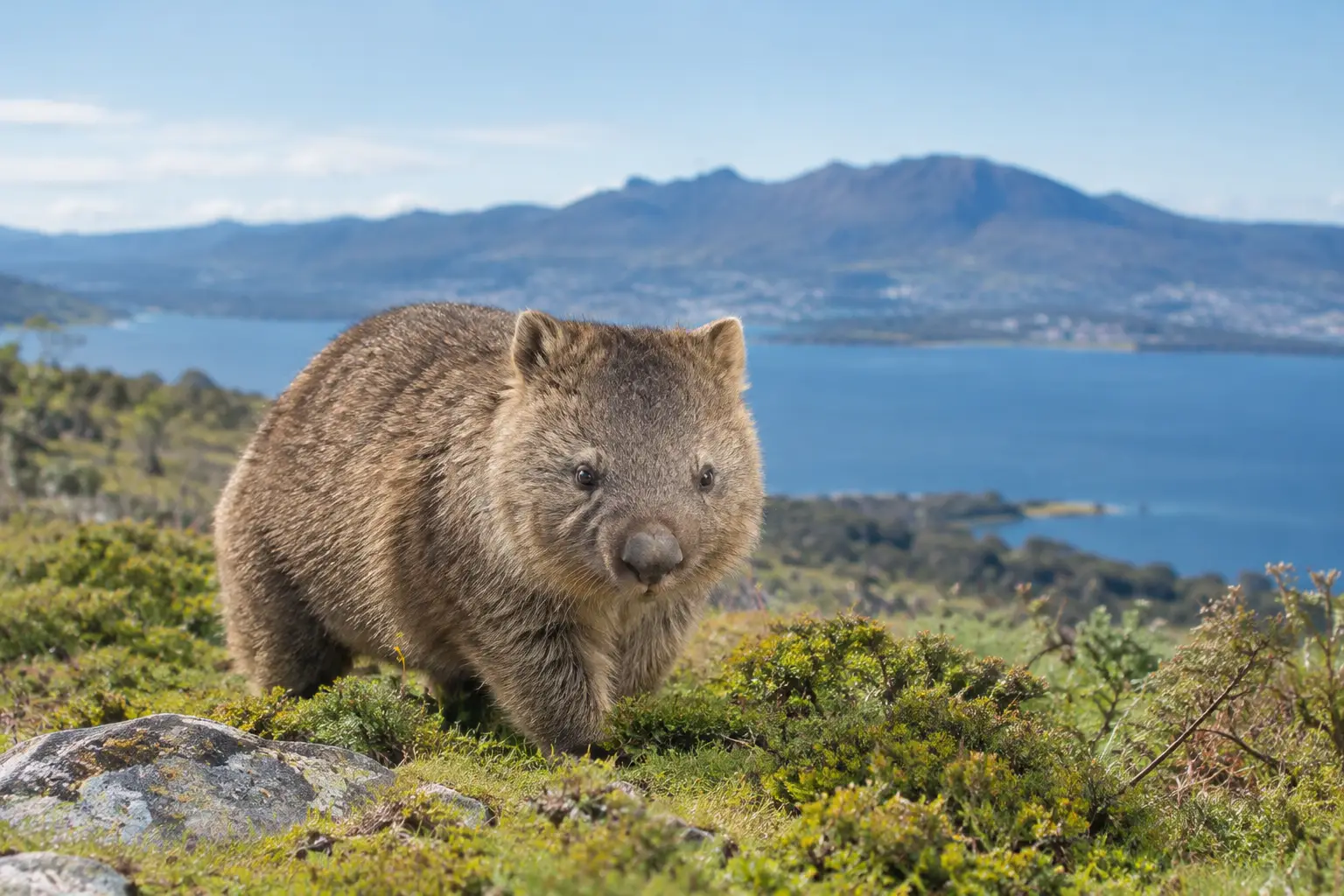
A wombat sighting is rarely a grand entrance. More often, it is a quiet reward: a sturdy, low-slung shape grazing at the edge of a clearing as daylight fades, seemingly unbothered by the immense beauty around it. For travellers hoping to see wombats near Hobart, that unhurried moment is possible, but it calls for the right setting, patient timing and a respectful approach.
Tasmania is one of Australia’s best places to encounter wild wombats, yet the most memorable sightings are never guaranteed or staged. That is precisely their charm. With considered planning, a private journey from Hobart can pair this gentle wildlife encounter with ancient forests, mountain air, superb local produce and the comfort of returning at your own pace.
Are there wild wombats near Hobart?
Yes, although Hobart’s immediate city surrounds are not the place to expect a reliable daytime encounter. Common wombats live across Tasmania, particularly in cool-temperate forests, grasslands and open clearings where they can graze after dark. The most promising areas are generally reached on a leisurely day trip or an overnight journey from the city.
Mount Field National Park is one of the most appealing options for travellers based in Hobart. Its tall eucalypt forests, fern-lined walks and broad grassy edges create the kind of habitat wombats favour. Around dusk, particularly in quieter areas away from the busiest visitor spaces, there is a genuine chance of seeing one emerge to feed.
Further afield, Bruny Island and Maria Island are well known for wildlife, including wombats. Both demand more time and, in the case of the islands, ferry planning. They are wonderful choices for guests who would rather build wildlife into a full day or multi-day Tasmanian experience than rush through a single evening outing.
A gentle distinction: wild sightings and sanctuary visits
For a dependable introduction to wombats, a respected wildlife sanctuary near Hobart offers the greatest certainty. These visits can be particularly rewarding for families, travellers with limited time, or anyone wanting to understand the rehabilitation work behind wildlife care. You may see resident wombats at close range and learn about the threats they face, including road trauma and mange.
A sanctuary encounter is different from seeing a wombat in the wild, and both have value. The former offers context and confidence; the latter offers the privilege of observing an animal on its own terms. A thoughtful itinerary can reflect which experience matters most to you.
The best time to see wombats near Hobart
Wombats are largely nocturnal, though they may be active in the late afternoon, early morning or on cool, overcast days. Dusk is usually the sweet spot. It is when the landscape softens, birds settle into the canopy and wombats begin moving out from their burrows towards open feeding areas.
Winter and the cooler shoulder seasons can be especially favourable because wombats may appear earlier in the afternoon. Summer brings longer, warmer days, meaning sightings often happen later. The trade-off is simple: an evening wildlife search may be more productive, but it needs to be planned around changing light, cooler temperatures and a safe return journey.
Weather also matters. A gentle, grey afternoon can be more promising than a hot, bright one. Still, wildlife does not operate to a timetable. The right expectation is not a promise of a photograph, but time in suitable habitat with a guide who understands when to pause, where to look and when to let the landscape be quiet.
Mount Field: a rewarding day with a dusk finale
Mount Field works beautifully for guests who want more than a wildlife stop. The journey from Hobart passes through the Derwent Valley, where orchards, historic townships and local food producers offer opportunities to shape the day to your interests. A private itinerary may begin with a refined lunch or a tasting, continue through the park’s towering forests and waterfalls, then ease into the late afternoon when wombats are more likely to be active.
Russell Falls is deservedly popular, but the real luxury of a tailored visit lies in moving beyond the standard rhythm. It might mean selecting a quieter walk suited to your mobility and appetite for adventure, enjoying afternoon tea in a scenic spot, or allowing extra time at a clearing rather than watching the clock.
The return to Hobart after dusk should be deliberate. Wildlife is frequently active on Tasmanian roads at night, and driving demands caution. Travelling with an experienced local driver allows you to settle into the journey rather than manage unfamiliar roads in fading light.
How to watch a wombat respectfully
A wombat may look wonderfully calm, but it is a powerful wild animal with a strong need for space. The best sightings are those that leave no trace of your presence. Stay well back, keep voices low and allow the wombat a clear path to its burrow or feeding area.
Never feed a wild wombat. Human food can cause harm, and feeding changes natural behaviour in ways that place animals at greater risk. Avoid flash photography, particularly as darkness falls. If a wombat raises its head repeatedly, changes direction, appears tense or retreats, you are too close.
Dogs should not accompany wildlife-viewing walks. Even a well-behaved dog can cause distress or provoke a defensive reaction. It is also wise to check footwear and clothing after walking through bushland, then clean them before visiting another sensitive area. Small considerations such as these help protect Tasmania’s vulnerable ecosystems.
If you notice a wombat showing signs of mange, such as patchy fur, thickened skin or unusual lethargy, do not attempt to treat or handle it. Record the location carefully and report the animal to the appropriate local wildlife authority or rescue organisation. Timely reporting can make a meaningful difference.
Why a private wildlife experience changes the day
Wildlife viewing does not sit comfortably within a rigid coach-tour schedule. A wombat does not emerge because a group has arrived, and the best conditions may ask for a little flexibility. This is where private touring is particularly valuable: the day can move with the weather, the light and your own interests.
For some guests, the ideal experience is a leisurely gourmet lunch followed by forest walking and a dusk search. For others, it is a sanctuary visit combined with local history, a scenic drive and a quiet dinner back in Hobart. Couples may prefer a completely unhurried evening, while multi-generational families often appreciate a pace that keeps everyone comfortable.
VIP Tassie Experiences creates these journeys with the discretion and local insight that wildlife encounters deserve. Private luxury transport means room to adjust the route, linger when conditions feel promising and travel home in comfort after an evening in the bush.
Set expectations for a better encounter
The most satisfying way to plan around wombats is to hold two ideas at once: Tasmania offers excellent opportunities to see them, and wild animals owe us nothing. A local guide can improve the odds through habitat knowledge and timing, but no ethical operator should guarantee a wild sighting.
That uncertainty is part of the experience. It encourages attention to everything else unfolding around you: the changing colour of the mountain ranges, the scent of wet forest, a pademelon disappearing into bracken, or the hush that arrives before nightfall. Even without a wombat in view, these are the details that make Tasmania feel intimate rather than simply scenic.
Give the search enough time, choose a setting that suits your travel style, and let the encounter remain a quiet possibility rather than a demand. When a wombat finally ambles into a clearing, you will understand why the wait is part of the story.


Experiences
Book a Tour
Plan your tailored Tasmanian journey with ease—reserve your private tour today.


