
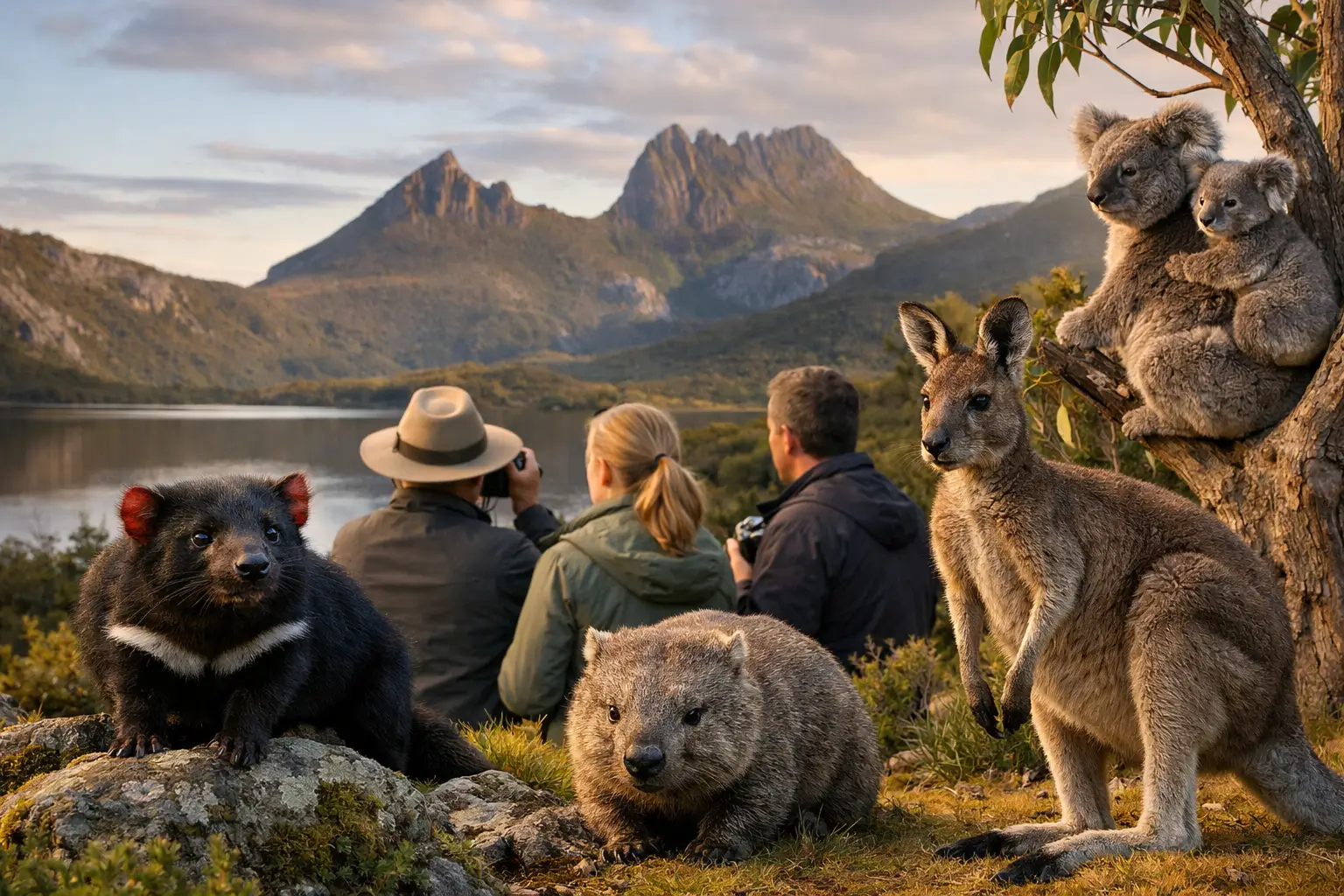
A wombat emerging from button grass at dusk has no interest in a timetable. Neither does a sea eagle circling above a quiet inlet, or a little penguin returning to shore after sunset. The best Tasmania wildlife encounters happen when there is room to wait, listen and let the landscape set the pace.
For travellers who value privacy and comfort, Tasmania offers an unusually rich mix of wildlife experiences within reach of Hobart and across the island. The key is choosing the right place, the right time of day and, above all, an approach that respects the animals rather than chasing a photograph.
What makes a wildlife encounter truly memorable?
Seeing an animal is one thing. Watching it behave naturally is another. A hurried stop beside a crowded viewing platform may deliver a tick on a list, but it rarely offers the stillness that makes wildlife travel so affecting.
A thoughtfully planned private day allows for the variables that matter. Light changes. Weather moves in from the coast. A wombat may appear twenty minutes later than expected. Your guide can alter the order of the day, pause at an unexpected sighting or extend a quiet moment without asking a coachload of strangers for permission.
This is also the more considerate way to travel. Tasmania’s fauna is precious and, in many cases, vulnerable. The finest encounters keep a respectful distance, avoid feeding or handling animals, and put habitat before spectacle. Good guiding means knowing when to stop, where to stand and when to leave an animal undisturbed.
The best Tasmania wildlife encounters to plan around
Wombats on Maria Island
Maria Island is one of Tasmania’s most rewarding places to see bare-nosed wombats grazing in open grassland. They are often visible during the day, particularly where the island’s cleared areas meet bushland, yet the experience still feels wonderfully unmanufactured. A wombat ambling through golden grass with the old Darlington settlement nearby is a distinctly Tasmanian scene.
Maria Island also offers chances to see Forester kangaroos, wallabies, Cape Barren geese and a remarkable variety of birdlife. It is an ideal choice for travellers who enjoy a day with a little movement in it: a scenic crossing, gentle walking and time to absorb the island’s layered natural and convict history.
There are practical trade-offs. Ferry times shape the day, conditions can be changeable and the island is best suited to guests comfortable with walking on uneven ground. For those willing to make the effort, it offers an exceptional sense of remoteness without requiring a multi-day wilderness expedition.
Tasmanian devils at an ethical sanctuary
Tasmanian devils are famously elusive in the wild, largely nocturnal and difficult to observe without disturbing them. For most visitors, a respected wildlife sanctuary is the most meaningful and responsible way to see them closely, learn about their conservation, and understand the impact of devil facial tumour disease on the species.
A sanctuary visit can be particularly valuable for families and for travellers with limited time in Hobart. It may also introduce you to other native species, including quolls, echidnas, kangaroos and injured or rehabilitating birds of prey. The setting is controlled, but the conservation story is very real.
Ask what your visit supports. The best facilities place animal welfare, rehabilitation, education and long-term conservation ahead of entertainment. A private itinerary can pair this experience with a quieter nature stop, so the day feels connected to Tasmania’s living landscapes rather than confined to an enclosure.
Little penguins after dark
Watching little penguins come ashore is one of the island’s gentlest evening rituals. After feeding at sea, the smallest penguin species in the world returns under cover of darkness, gathering in small rafts before waddling towards burrows in the dunes.
Bruny Island can offer beautifully intimate penguin-viewing opportunities, especially when planned as part of a longer coastal day. The experience requires patience and restraint: keep voices low, avoid flash photography, stay behind designated viewing areas and let the penguins choose their route. A red-filtered light, where permitted and provided by the operator, is far less intrusive than a bright torch.
Timing matters here. Penguin activity changes through the breeding season, weather can affect arrival patterns, and a sighting is never something that should be promised on demand. The anticipation is part of the pleasure. A fine dinner, a coastal sunset and an unhurried wait make the evening feel complete, whether the birds arrive in dozens or only a few.
Seals, seabirds and wild coastline on Bruny Island
Bruny Island is not simply a place to see wildlife. It is a place to feel the scale of the habitat that supports it. On a clear day, the island’s cliffs, beaches and kelp-fringed waters create a dramatic setting for seals, shearwaters, albatross and other seabirds.
Australian fur seals are often seen resting on rocky ledges or offshore formations, though their location varies. Offshore boat experiences can bring guests closer to marine life and towering dolerite cliffs, while land-based exploration suits travellers who prefer to keep the day entirely on shore. Neither is inherently better. It depends on your comfort on the water, the weather and whether your ideal day includes a long lunch, a coastal walk or time at a local producer.
The Neck is particularly memorable for its broad sweep of sand, birdlife and changing light. Early morning and late afternoon are generally more atmospheric than the busiest middle hours of the day.
Platypus in quiet freshwater country
A glimpse of a platypus can feel like a private reward. These shy animals favour calm freshwater rivers and ponds, and the best viewing is usually at dawn or near dusk, when the surface is still and the day is quietening.
Patience is essential. Look for a small ripple, a soft V-shaped wake, or the brief rise of a rounded back before it disappears. You may wait for some time, and you may not see one at all. Yet that is precisely why an encounter, when it comes, is so special.
The Central Highlands, Derwent Valley and some carefully chosen waterways closer to Hobart can be suitable depending on season and conditions. A guide with local knowledge can read recent weather, select an appropriate location and build the outing around the experience rather than treating it as a guaranteed attraction.
Birds of prey, forest birds and the smaller details
Tasmania rewards travellers who do not focus only on its headline animals. Wedge-tailed eagles may be seen soaring over open country, though nests must always be given generous space. In forest and wetland settings, you may encounter black swans, native hens, yellow-tailed black cockatoos, superb fairy-wrens, green rosellas and, with luck, the vibrant flash of a scarlet robin.
These sightings often arrive between planned stops: from the window of a luxury Mercedes as the road curves through the countryside, during a vineyard stroll, or while standing quietly at the edge of a forest. They are a reminder that wildlife is not always a separate activity. In Tasmania, it is woven through the journey.
When to travel for wildlife in Tasmania
There is no single perfect season. Spring brings active birdlife, wildflowers and fresh green landscapes, while summer offers longer daylight hours and easier access to many coastal areas. Autumn can be wonderfully calm and richly coloured, especially for walking and food-led itineraries. Winter has its own rewards: fewer visitors, dramatic skies and a deeply atmospheric feel, although daylight is shorter and conditions can be brisk.
For specific animals, timing is more nuanced. Platypus viewing favours the softer light of dawn and dusk. Penguins require an evening plan. Wombats can often be seen during the day on Maria Island, but are still more active in cooler conditions. Marine wildlife is affected by weather, sea state and seasonal movement.
A well-crafted itinerary does not force every animal into one day. It chooses two or three experiences that suit your interests, energy and travel dates, leaving enough space for excellent food, scenic pauses and the pleasure of being looked after.
How to experience wildlife with care and comfort
The luxury in a private wildlife day is not about getting closer than everyone else. It is about having the time, knowledge and calm to experience nature properly. Dress for changing conditions, bring a warm layer even in summer, and use binoculars rather than stepping beyond a respectful viewing distance. Never feed wildlife, and keep scents, noise and bright lights to a minimum.
At VIP Tassie Experiences, private wildlife journeys can be shaped around the encounters that matter most to you, from a graceful coastal day on Bruny Island to a slower exploration of sanctuary conservation, freshwater habitats and local food. Your itinerary should feel effortless, but never hurried.
Leave room for the unscripted moment. It may be a wombat in long grass, a penguin call after sunset or a shadow moving beneath a still river surface. Tasmania is at its most generous when it is given time to reveal itself.


Experiences
Book a Tour
Plan your tailored Tasmanian journey with ease—reserve your private tour today.


