
Table of Contents
- Start With Your Travel Style, Not a Fixed Map
- The Bespoke Tasmania Tour Booking Process, Step by Step
- Realistic Drive Times and Route Trade-Offs
- A Tasmania Itinerary 7 Days in Luxury
- A Tasmania Itinerary 10 Days With Room to Breathe
- Building a Luxury Tasmania Road Trip With a Private Guide
- Seasonality, Weather and the Best Time to Visit
- Conclusion
- Frequently Asked Questions
Last Updated: October 15, 2026
Start With Your Travel Style, Not a Fixed Map
The best luxury Tasmania itinerary starts with how you want to feel, not a list of pins. At VIP Tassie Experiences, we build private journeys around pace, interests and energy levels.
Tasmania is small on paper but slow in practice. Distances that look trivial on a screen can take half a day once you factor in winding coastal roads, wildlife at dusk and the fact that the best stops are rarely the closest.
Three planning principles guide every itinerary we craft:
- Anchor, don’t cram. Choose two or three regions and go deep rather than touching six and remembering none.
- Build in slack. One unhurried afternoon per two days protects the trip from weather and whim.
- Match the vehicle to the group. Comfort over distance travelled, every time.
The most common planning mistake is treating Tasmania like a checklist. Travellers who slow down and stay longer consistently report the richer experience.
Matching Pace to Group and Season
A honeymoon couple, a multi-generational family and a solo photographer need three different itineraries, even along the same coastline.
Season shapes pace as much as company does. Long summer days suit ambitious driving; winter rewards shorter hops and cosier stops at cellar doors, galleries and historic sites.
Tourism Tasmania’s official visitor information is a useful starting point for seasonal context and regional highlights.
The Bespoke Tasmania Tour Booking Process, Step by Step
Booking a private, tailor-made journey should feel effortless. Here is the process we follow for anyone planning a luxury Tasmania itinerary.
- Share your rough idea. Even a loose wish list, a few Instagram saves or a guidebook page is enough to begin.
- Have a discovery call. We ask about pace, interests, dietary needs, mobility and the moments you care about most.
- Receive a draft itinerary. You get a day-by-day outline with realistic drive times and suggested stops.
- Refine it together. Swap, add or remove days until the shape feels right.
- Confirm and prepare. We lock in bookings and send a clear pre-trip brief.
What to Prepare Before Your First Call
A short list makes the first conversation far more productive:
- Your travel dates and total number of nights
- Who is travelling, including ages and any mobility needs
- Two or three must-do experiences
Bring your existing itinerary, even a messy one. It tells us what you value faster than any questionnaire.
Realistic Drive Times and Route Trade-Offs
Drive times are where most self-planned itineraries quietly fall apart. Mapping apps measure distance, not a coastal road at dusk with a wallaby on the verge. Allow generous buffers, especially on the west and east coasts.
The core trade-off is simple: cover more ground and see less of each place, or cover less and experience more. For a luxury trip, favour the second.
| Route | Approx. Drive Time | Best For |
|---|---|---|
| Hobart to Freycinet | 2.5 hours | Coastal scenery, Wineglass Bay |
| Hobart to Cradle Mountain | 4.5 hours | Wilderness, alpine walks |
| Launceston to Stanley | 2.5 hours | Historic towns, The Nut |
| Strahan to Hobart | 4.5 hours | West coast wilderness |
| Hobart to Port Arthur | 1.5 hours | Convict history, coastal drives |
Treat these as planning anchors, not schedules.
What the Numbers Do Not Tell You
A few realities that only show up once you are on the road:
- Wildlife at dawn and dusk. Much of the island’s wildlife is most active in the low light, and animals on the tarmac are a genuine hazard. Avoid long transfers in the first and last hour of daylight where you can.
- Winding west coast roads. The run to Strahan and around Cradle Mountain is slower than its distance suggests, tight corners, single-lane sections and few overtaking opportunities.
- Fuel and services gaps. Stretches of the west and north-west have long gaps between fuel and food. Fill up when you can, not when you must.
When a Day Is Overpacked
A useful rule of thumb: if a day involves more than about three hours of total driving plus two substantial stops, it is probably overpacked for a luxury pace. Signs you have crammed too much in:
- You are leaving before breakfast or arriving after dark.
- You are skipping a stop you actually wanted to see.
- You have no slack for weather, a long lunch or an unexpected detour.
Anchor each day around one headline experience, then let driving and smaller stops fill the space around it.
Do not plan a long west coast transfer on the same day as a timed booking. Weather, wildlife and road conditions can add an hour or more, and a missed reservation is rarely refundable.
Scenic Detours Worth the Time
Some of the best moments sit just off the main route, and a private guide will know which suit your pace:
- The east coast‘s coastal lookouts and oyster stops between Hobart and Freycinet.
- The Tamar Valley wine route north of Launceston, best done with a driver.
- The Derwent Valley and Huon Valley loops as half-day add-ons from Hobart.
A private guide can flex around weather, wildlife and the day’s mood, which is why the most comfortable luxury itineraries are built with slack, not schedules.
A Tasmania Itinerary 7 Days in Luxury
Seven days suits travellers who want a focused taste of the island without rushing. A well-paced Tasmania itinerary 7 days in luxury typically pairs Hobart and the east coast with one wilderness highlight, leaving room for unhurried meals and private experiences.
A sample shape:
- Days 1-2: Hobart, MONA, Salamanca and the Derwent Valley
- Days 3-4: Freycinet National Park, Wineglass Bay and the east coast
- Days 5-6: Launceston, the Tamar Valley and Cradle Mountain
The key is resisting the urge to add a west coast leg. Save Strahan for a longer trip.
A Tasmania Itinerary 10 Days With Room to Breathe
Ten days is where a luxury Tasmania road trip becomes genuinely unhurried. You can add the west coast, slow the pace and still keep a spare afternoon for the unexpected.
Days 1-3: Hobart, MONA and the Derwent Valley
Base yourself near the waterfront for the first two nights so the city is walkable and the drive to MONA is short. A private after-hours or early-access style visit to MONA, arranged through your operator, avoids the ferry crowds and pairs naturally with a long lunch at a Derwent Valley cellar door on the return leg.
- Stay: a heritage harbourfront property or a private retreat in the Derwent Valley for the third night.
- Eat: book the city’s tasting-menu rooms two to three months ahead for peak dates; smaller cellar-door kitchens often need only a week or two.
- Do: a private walking tour of Salamanca and Battery Point, then a Huon Valley produce drive with a guide who can open doors at working farms.
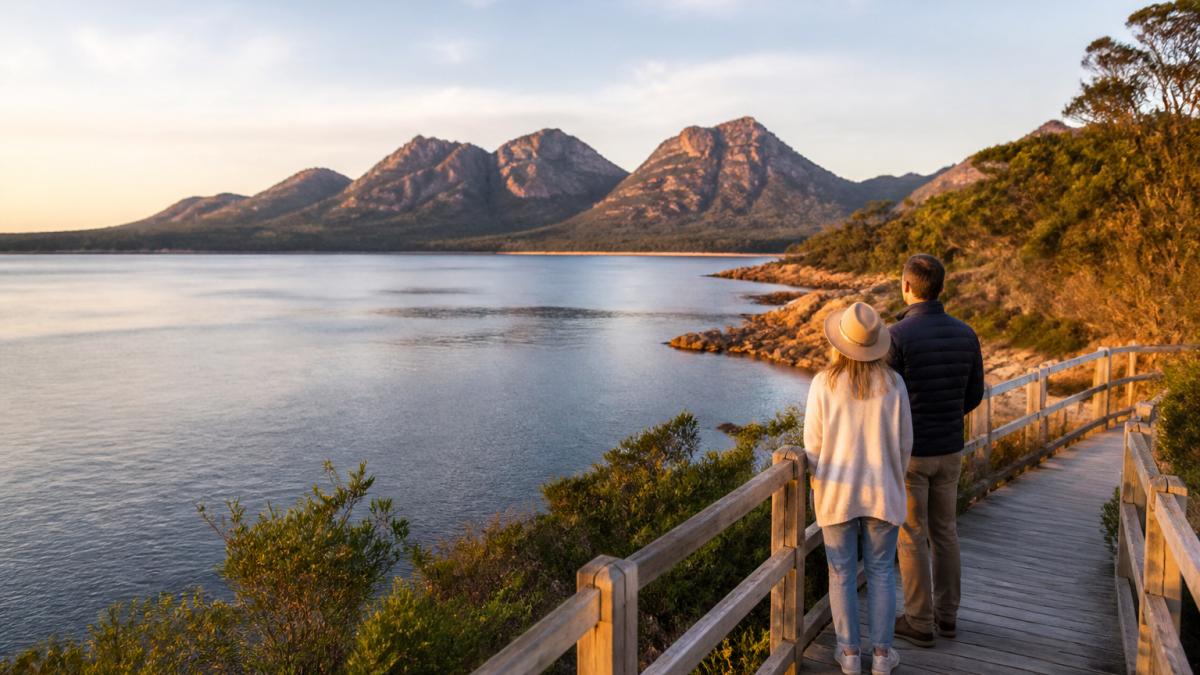
Days 4-5: Freycinet and the East Coast
Allow a half-day for the drive from Hobart with a stop at a coastal winery, then give Freycinet a full day. The Wineglass Bay lookout walk is the headline, but the quieter luxury move is a private boat or sea-kayak departure that reaches the bay before the day-trippers.
- Stay: a lodge with direct beach or bushland frontage rather than a town motel; these book out earliest over summer and school holidays.
- Eat: the east coast’s best tables are small, so reserve as soon as your dates are fixed.
- Do: a guided oyster-farm tasting on the way north, a classic limited-capacity experience that sells out days ahead.
Days 6-7: Launceston and the Tamar Valley
Launceston rewards a slower day: the cataract gorge, a design-led gallery and a Tamar Valley wine route that suits a private driver. It is also the natural staging point for Cradle Mountain the following morning.
- Stay: a converted heritage property in town or a vineyard estate in the valley.
- Eat: a long lunch at a Tamar cellar door is the region’s signature luxury experience; book a week or more ahead.
- Do: a private gin or whisky tasting, and a twilight platypus walk if the season allows.
Days 8-9: Cradle Mountain and the West Coast
The drive to Cradle Mountain is the trip’s longest single leg, so treat it as a travel day with a scenic stop rather than a sightseeing marathon. A private guided alpine walk at dawn beats any afternoon group departure. From Cradle, push through to Strahan for the west coast’s rainforest and harbour, and consider a private Gordon River cruise rather than the standard vessel.
- Stay: a wilderness lodge with lake or forest views; these are the scarcest rooms on the island, so lock them in first.
- Eat: dining is limited out west, your operator should pre-arrange dinners rather than leaving them to chance.
- Do: a private rainforest walk and a Gordon River cruise; both benefit from booking weeks ahead in peak season.
Day 10: A Relaxed Return With a Final Cellar Door Stop
Return east at an easy pace, with a final long lunch and a cellar-door stop before departure. Keep this day deliberately loose, it is the buffer that absorbs weather, wildlife delays and the temptation to stay one more hour somewhere.
Build the ten-day arc around your three non-negotiable experiences first, then fit accommodation and driving around them. Limited-capacity dining, private cruises and wilderness lodges are the pieces that dictate the shape of the trip, not the other way around.
Booking Lead Times at a Glance
A common pattern among luxury travellers is to book the scarce elements first and the flexible ones last:
- Wilderness and beachfront lodges: three to six months ahead for summer and school holidays.
- Tasting-menu restaurants and signature cellar-door lunches: two to three months ahead for peak dates.
- Private guides, cruises and wildlife experiences: four to eight weeks ahead, longer for peak season.
Treat these as planning anchors, not rigid rules. A good operator will tell you which nights are the constraint and which can move.
Building a Luxury Tasmania Road Trip With a Private Guide
A self-drive trip and a guided one are not the same product, and the difference shows up in the details. A private guide turns a route into a narrative: the story behind a convict site, the best table in a small town, the beach that never appears in guidebooks.
With VIP Tassie Experiences, every journey runs in a spacious modern vehicle with a local guide who knows the island intimately. No crowded buses, no rigid schedules, just a day shaped around you.
Travellers who want depth, flexibility and local insight without the logistics of self-driving.
Seasonality, Weather and the Best Time to Visit
There is no single best time to visit, only the season that suits your plans. Summer brings long days and warm coastal weather, ideal for beaches and walking. Autumn delivers calm conditions and vivid highland colour.
Rain is possible year-round, so pack layers and a waterproof shell regardless of season. A flexible itinerary matters more than a perfect forecast.
Conclusion
Planning a luxury Tasmania itinerary comes down to pace, not pins. Match the trip to your group, respect real drive times and build in room to breathe. That is the difference between seeing Tasmania and experiencing it.
VIP Tassie Experiences crafts bespoke, private day tours across the island, with tailored itineraries, spacious modern vehicles and local guides who know the hidden gems.
Frequently Asked Questions
How do you plan a luxury Tasmania itinerary?
Start with your travel style and group pace, not a fixed map. Decide how many days you have, which regions matter most, and whether you want a self-drive or guided experience. Then build in realistic drive times, book premium accommodation early, and reserve in-demand experiences like Wineglass Bay cruises or Cradle Mountain walks well ahead. A bespoke operator can handle the logistics while you focus on what you actually want to see.
How much should you budget for a luxury Tasmania trip?
Pricing depends on trip length, group size, accommodation standard and how many private guiding days you include. Rather than quoting a single figure, treat it as a tiered budget: premium stays, private transport, and reserved experiences each add cost. Ask your tour provider for a tailored quote based on your dates and interests, and confirm what is included before you commit.
Is it better to self-drive or book a private tour in Tasmania?
Self-drive gives you full control of the schedule but means you handle navigation, parking and fatigue on winding rural roads. A private tour removes those pressures and adds local knowledge you cannot get from a guidebook. Many travellers combine both: self-drive for flexible coastal stretches and a private guide for wine regions, wildlife evenings or multi-generational days where logistics matter most.
How far in advance should you book luxury accommodation and experiences?
For peak periods, book premium accommodation and signature experiences several months ahead. Popular lodges near Cradle Mountain, Freycinet and the east coast fill quickly, and private guiding dates are limited. If your trip falls in summer or around major events, aim to lock in the core of your itinerary early, then refine dining and smaller activities closer to departure.
How long should you spend in Tasmania?
A Tasmania itinerary 7 days covers Hobart, the east coast and one wilderness region comfortably. A Tasmania itinerary 10 days adds the west coast, Stanley and the north, with slower mornings and fewer long drives. If you want a genuinely unhurried luxury pace with time for wine, wildlife and coastal walks, lean toward ten days or more.
What should you include in a bespoke Tasmania itinerary?
Include a mix of coastal scenery, wilderness, food and wine, and wildlife. Anchor each day around one main experience rather than three rushed stops. Build in a private guide for at least a few days, choose handpicked accommodation near your key sights, and leave buffer time for weather changes. A good bespoke Tasmania tour booking process starts with your priorities, not a template.


Experiences
Book a Tour
Plan your tailored Tasmanian journey with ease—reserve your private tour today.


