
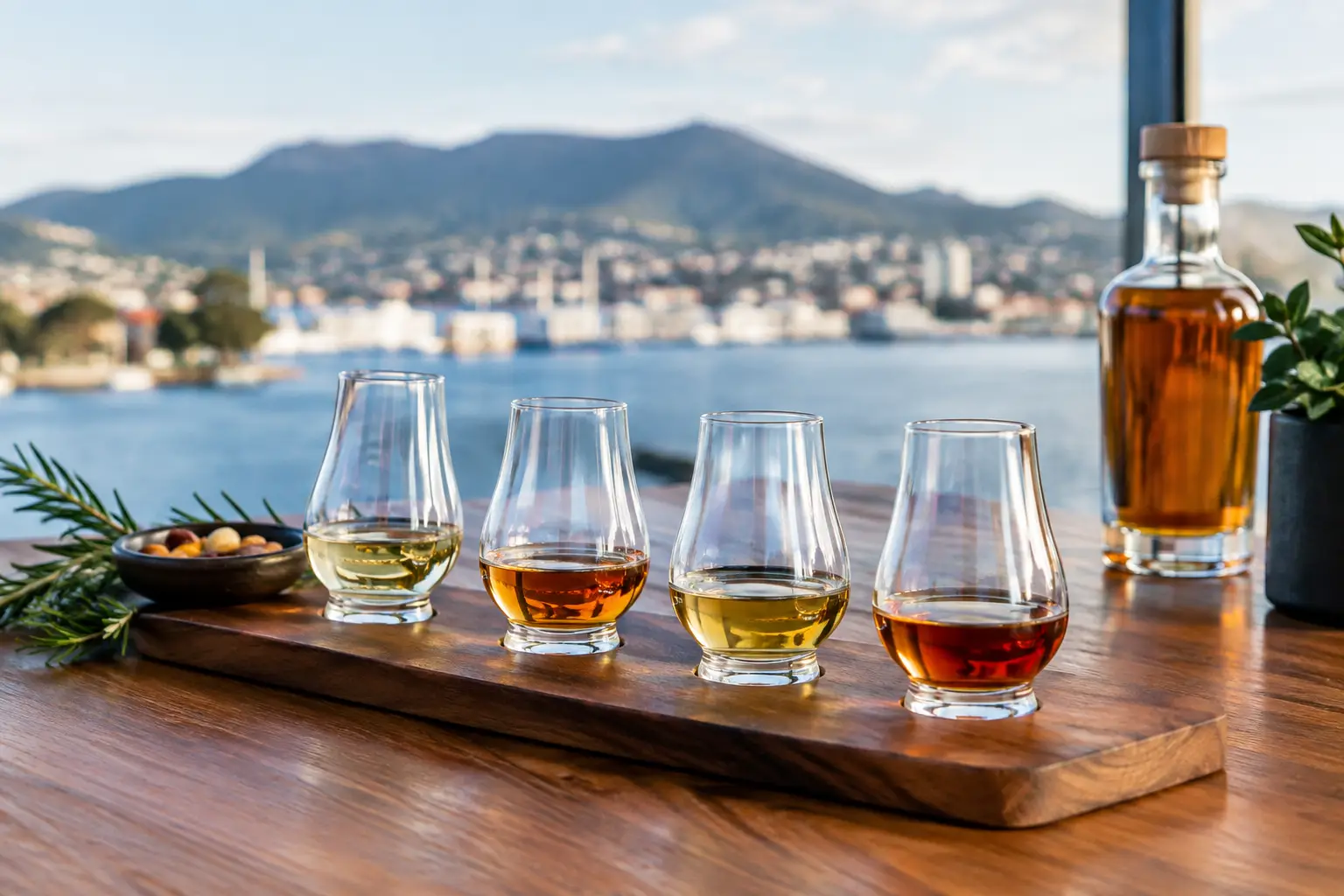
A great distillery day is not measured by how many tasting rooms you can fit in. It is the lingering warmth of a fine single malt, the bright lift of a locally foraged botanical, and the pleasure of having nowhere else to be. This Tasmanian distillery tasting guide is designed for travellers who would rather savour a few exceptional encounters than race between cellar doors with a timetable in hand.
Tasmania has earned a global reputation for its spirits, particularly whisky, yet the experience is far more varied than one category alone suggests. From maritime malts shaped by coastal air to crisp gins with native aromatics, the island rewards curiosity, a considered pace and a comfortable way home.
Why Tasmania makes spirits worth travelling for
The ingredients begin with place. Pure water, cool climate conditions, quality local grain and a community of producers willing to work patiently all contribute to the character in the glass. But the real appeal is not simply technical. Many Tasmanian distilleries feel personal. You may taste in a former farm building, beside a working still, or in a quiet room where the person explaining the spirit has helped make it.
Whisky lovers will find impressive range. Some styles are delicate and orchard-fruited; others are oily, coastal, smoky or rich with dried fruit from sherry-seasoned casks. The state’s smaller scale means releases can be limited, and a distillery visit may offer access to expressions that never appear on a standard bottle-shop shelf.
Gin is equally compelling, especially for travellers drawn to fragrance and texture. Expect juniper at the core, then a distinctly Tasmanian sense of landscape: pepperberry, kunzea, citrus, bush herbs, sea vegetables or seasonal fruit. Vodka, brandy and liqueurs also deserve attention, though availability naturally varies between producers and seasons.
A Tasmanian distillery tasting guide: choose depth over distance
The temptation is understandable. A map can make distilleries appear close together, particularly around Hobart and the Coal River Valley. Yet winding roads, appointment times, tastings and lunch soon make an overfull plan feel rushed. For most guests, two thoughtful distillery visits make a more rewarding day than four hurried stops.
Allow enough time to settle into each setting. A hosted tasting is not merely a row of glasses. It is an opportunity to ask why a producer chose a particular barley, cask or botanical, and to notice how the spirit changes with a few drops of water or a different garnish. The most memorable moments often arrive after the formal pour, in the stories and small details that a rushed visit misses.
Your ideal combination depends on your palate. A whisky-focused day may pair an established maker with a smaller, more experimental producer. If your group includes both whisky devotees and gin drinkers, choose venues with contrasting styles rather than trying to satisfy everyone with the same spirit. A private itinerary can also leave room for a scenic lookout, a farm-gate stop or an unhurried lunch, which gives the day a sense of place rather than turning it into a tasting circuit.
Start with a clear flavour preference
Before setting out, think beyond whether you “like whisky” or “prefer gin”. Those broad categories are useful, but they do not tell the whole story.
For whisky, consider whether you gravitate towards honeyed and soft, spicy and oak-led, fruity and wine-cask rich, or savoury and peated styles. If you are unsure, that is no disadvantage. A good host can guide you through contrasting pours and help identify the notes that appeal to you.
For gin, decide whether you favour a classic dry profile, something citrus-forward, floral, earthy or richly spiced. Ask how the distiller suggests serving it. A tonic that is too sweet, or a heavy-handed garnish, can obscure the character that took so much care to create.
Let lunch do some of the work
A considered lunch is essential, not an interruption between tastings. Fresh seafood, locally raised produce, cheese and seasonal vegetables can reset the palate and make the afternoon feel altogether more civilised. It also gives your host an opportunity to pace the day according to how you are feeling, rather than following a fixed coach-tour schedule.
Avoid a very sweet meal before a serious whisky tasting if you can. Sweetness can flatten subtler flavours. Similarly, heavily spiced food may make delicate gin botanicals harder to read. There is no need to be overly strict, though. A holiday should still feel like a holiday, and Tasmania’s dining is one of the pleasures worth building around.
How to taste with confidence
There is no need for a practised nose or a collector’s vocabulary. The best approach is slow, open-minded and pleasantly unpretentious. Begin by looking at the spirit, then bring the glass towards your nose gently. Take short breaths rather than one deep inhale. Notice the first impression, then return after a moment. Fruit, cereal, spice, herbs, citrus peel, vanilla, smoke and sea air are all fair observations if that is what you find.
Take a small sip and let it rest across the palate. With whisky, a drop or two of water can reveal a different side of the spirit, particularly at cask strength. With gin, taste it neat first where appropriate, then try the recommended serve to understand how tonic, ice and garnish shift the balance.
Most importantly, do not feel pressured to enjoy the same expression as everyone else. One person’s prized peat smoke can be another person’s campfire. Taste is personal, and knowledgeable distillers know that. A gracious tasting room welcomes honest preference, thoughtful questions and a little conversation.
Practical details that protect the pleasure
Distillery visits require more planning than a casual café stop. Some operate on restricted opening days, some require bookings, and some offer different experiences depending on the season. Small producers may be working around production schedules, private events or limited releases. Booking ahead is particularly wise for weekends, summer travel and groups.
Dress for the weather rather than the tasting room. Tasmania can offer bright sun, cold wind and rain across a single afternoon, especially near the coast or in elevated areas. Comfortable shoes are useful if your visit includes a walk through a property or production space.
If you purchase bottles, consider how you will carry them home. Airline luggage rules, weight limits and breakage are practical concerns, particularly for travellers continuing on from Hobart. Your guide can help factor this into the day, whether that means allowing room in the vehicle, arranging purchases at the final stop or selecting a smaller number of bottles you will genuinely enjoy.
And, naturally, leave driving entirely to someone else. Responsible tasting is easier when there is no need to calculate distances, parking or who will remain behind the wheel. Private transport also means every guest can relax into the experience, from the first pour to the final view on the drive back.
The value of a private distillery day
A private spirits experience is not about creating distance from Tasmania. It is about getting closer to it, with the friction removed. There is no waiting for a large group, no compromise on an arbitrary meeting point, and no need to leave a conversation with a maker because the coach is departing.
With VIP Tassie Experiences, a distillery day can be crafted around your preferred spirits, accommodation location, dietary needs and desired rhythm. Perhaps that means a late start after a leisurely Hobart breakfast, a long lunch between tastings, or a scenic detour when the light over the water is too good to ignore. For collectors, it may mean appointments that focus on rare releases and production insight. For first-time tasters, it may simply mean an inviting introduction without jargon or pressure.
There are trade-offs. A tightly planned itinerary can cover more ground, while a slower day offers more room for conversation and discovery. The right choice depends on whether your priority is breadth, depth, scenery, food or a particular bottle. An experienced local host will help make those choices feel effortless before the day begins.
The finest Tasmanian spirits have a strong sense of origin, and the best tasting days do too. Give each pour time, let the landscape remain part of the occasion, and leave enough space for one unexpected favourite to become the bottle you remember long after your journey home.


Experiences
Book a Tour
Plan your tailored Tasmanian journey with ease—reserve your private tour today.


