
Table of Contents
- Why Tailored Food and Wine Tasmania Tours Beat the Coach Circuit
- Private Food and Wine Tours: What You Actually Get
- Building a Food and Wine Tour Itinerary That Fits Your Group
- Regional Itineraries: Hobart, Launceston and the Wine Regions
- Handling Dietary Requirements on Food Tours Without Compromise
- Personalised Day Tours for Every Group: Couples, Families and Solo Travellers
- What Drives the Price of a Tailored Tour
- Conclusion
- Frequently Asked Questions
Last Updated: October 17, 2026
Why Tailored Food and Wine Tasmania Tours Beat the Coach Circuit
Tailored food and wine Tasmania tours are private, guide-led experiences built around your interests, pace and group rather than a fixed coach schedule. At VIP Tassie Experiences, we design each day around the people in the vehicle, which is why no two itineraries look the same.
Coach tours cover distance. They rarely cover depth. A forty-seat coach cannot turn down a gravel lane to a five-table providore, and it cannot wait while you finish a conversation with a cheesemaker.
Below, we break down what private touring includes, how to shape an itinerary, and what drives the price.
Private Food and Wine Tours: What You Actually Get
Private food and wine tours give your group exclusive use of a vehicle and guide for the day, with a route agreed in advance and adjusted as you go. You set the start time, the pace and the stops. Nobody else’s preferences sit between you and the producer.
What that looks like in practice:
- A dedicated local guide who knows which cellar doors suit a serious collector versus a relaxed lunch
- Modern, spacious vehicles with room for wine purchases and comfortable seating between regions
- A route built around your interests, whether that is sparkling, pinot, cheese, oysters or all four
- Flexibility on the day to stay longer somewhere that surprises you
The best cellar door conversations happen when you arrive outside the coach window. Ask your guide to schedule the most interesting producer for mid-morning, before tasting rooms fill and staff have time to talk.
Building a Food and Wine Tour Itinerary That Fits Your Group
A food and wine tour itinerary works best when it balances three things: driving time, tasting volume and one genuinely unhurried meal. Groups that try to fit eight cellar doors into a day remember the car, not the wine.
Start with these decisions:
- Pick one region per day. Spreading across two wine regions means hours in the vehicle.
- Cap tastings at three or four. Palates fatigue, and the fourth tasting rarely gets the attention the first did.
- Anchor the day around lunch. A long, relaxed meal is what people remember.
- Leave one slot open. The best stop is often the one you did not plan.
A common mistake is treating the itinerary as fixed. Treat it as a framework with room to move.
Half-Day, Full-Day or Multi-Day: Choosing Your Pace
Half-day tours suit a single wine region plus one food stop, ideal for a couple easing into a holiday. Full-day tours allow a region, a long lunch and a scenic drive without rushing. Multi-day touring lets you link Hobart, Launceston and the wine regions properly, with time to slow down in each.
| Tour Length | Best For | Typical Shape |
|---|---|---|
| Half-day | Couples, first-timers | One region, 2 tastings, 1 food stop |
| Full-day | Families, friend groups | One region, 3-4 tastings, long lunch |
| Multi-day | Discerning travellers | Linked regions, mixed food, wine, nature |
Regional Itineraries: Hobart, Launceston and the Wine Regions
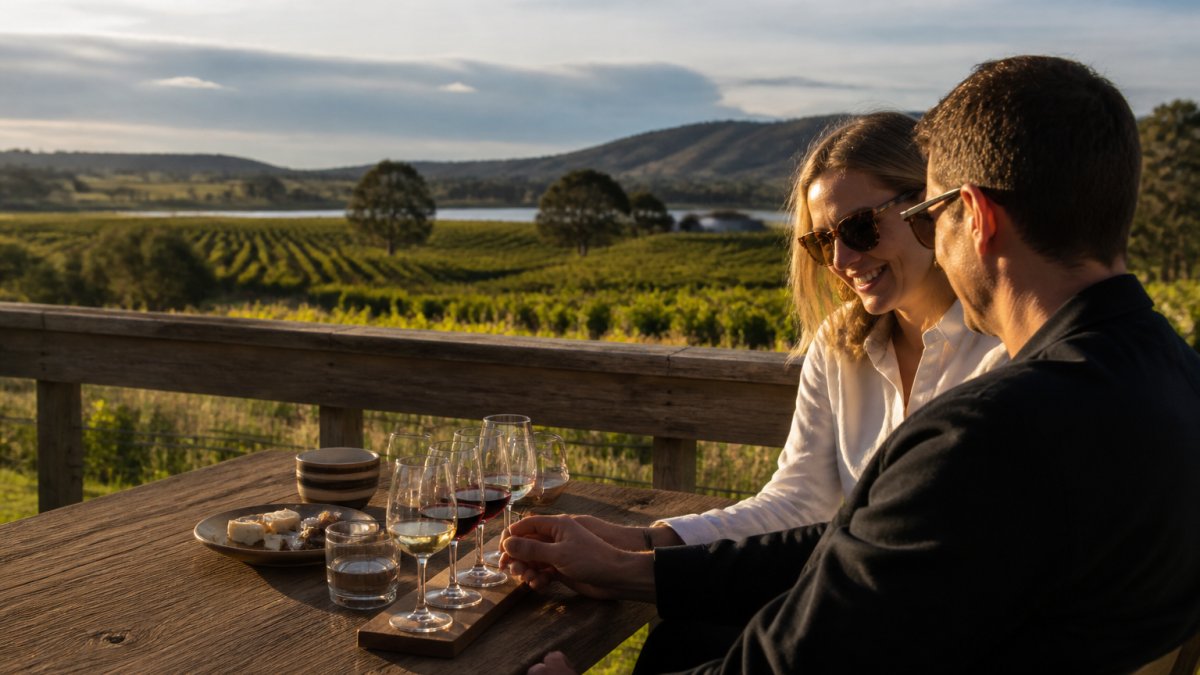
Regional choice shapes everything about the day. Each base gives you a different mix of wine styles, produce and driving distances. The practical rule is one region per day: the Coal River Valley, the Derwent Valley, the Tamar Valley and the East Coast each reward a full day, and trying to link two of them usually means two hours in the vehicle for every hour at a cellar door.
Hobart and the Coal River Valley
Hobart works as a base for the Coal River Valley, a compact wine region with cellar doors, farm gates and providores close together. A personalised day tour from here can pair cool-climate wines with local cheese, chocolate tasting and a relaxed gourmet lunch, all within short drives. It suits groups who want variety without long transfers.
A realistic full-day shape from Hobart:
- Morning: a sparkling or pinot tasting at a Coal River Valley cellar door, timed for when tasting rooms are quiet
- Mid-morning: a farm gate or providore stop for cheese, honey or preserves
- Lunch: a long, relaxed meal at a vineyard restaurant or a producer-led tasting
- Afternoon: one more cellar door and a scenic drive back through the valley
Drive times are short, most Coal River Valley cellar doors sit within 20 to 40 minutes of central Hobart, which is why this region suits half-day tours as well as full days. The Derwent Valley, further west, adds a different mix of cool-climate wines and orchard produce and works best as its own day rather than an add-on.
Launceston and the Tamar Valley
Launceston opens up the Tamar Valley, a wine region built along the river with vineyard visits, orchard stalls and producers who sell direct at the farm gate. The pace here feels slower and more rural. It rewards travellers who want behind-the-scenes access and conversations with the people who make the wine.
A Tamar Valley day typically runs north from Launceston along the river, with stops for sparkling and cool-climate whites, an orchard or berry stop in season, and a long lunch at a vineyard restaurant. Because the valley is linear, the drive is scenic rather than tedious, and most cellar doors sit within 30 to 50 minutes of Launceston.
Seasonality and the Regional Food Calendar
When you go matters as much as where. A common pattern across the regions:
- Late spring to summer: berries, stone fruit and early harvest produce; long daylight hours suit relaxed lunches
- Autumn: vintage activity in the vineyards, apple and pear harvest in the valleys, and some of the best produce variety of the year
- Winter: fewer crowds and more cellar-door time with winemakers, but some farm gates close or shorten hours
- Year-round: cool-climate wine tastings, cheese, honey and preserves, which do not depend on harvest
Ask your guide to check winery opening hours and farm-gate availability before locking an itinerary, small producers often close one or two days a week, and harvest-time visits can mean the winemaker is in the vineyard rather than the tasting room. Building the day around what is actually in season is the difference between a good tour and a memorable one.
Handling Dietary Requirements on Food Tours Without Compromise
Dietary requirements on food tours should never mean a plate of plain vegetables while everyone else eats well. Good operators confirm requirements at booking, brief every venue in advance and choose producers who can adapt properly.
What to tell your guide before the day:
- Allergies and intolerances, with severity noted
- Dietary preferences such as vegetarian, vegan or coeliac requirements
- Access needs, including mobility, seating preferences and walking distances
- Alcohol preferences, since many wine tours can substitute non-alcoholic tastings
Leaving dietary needs until you arrive at the cellar door often means a rushed alternative. Confirm requirements at booking so venues can prepare a proper gourmet lunch rather than a last-minute substitute.
Personalised Day Tours for Every Group: Couples, Families and Solo Travellers
Personalised day tours should flex to the group, not the other way around. A multi-generational family needs short drives, comfortable seating and stops that work for grandparents and children alike. A couple wants unhurried tastings and a long lunch. A solo traveller wants depth and local insight, not a seat on a crowded coach.
Travellers who want a private vehicle without a rigid schedule, from couples and families to solo visitors seeking off-the-beaten-path experiences.
The practical answer is a customised tour built around energy levels and interests. Split the group for part of the day if needed, keep the vehicle close, and let the guide adjust as the day unfolds.
What Drives the Price of a Tailored Tour
Tour price for a tailored experience depends on several variables rather than a single flat rate. The main drivers are the length of the day, the number of people, the distance covered between regions, and any premium inclusions such as private tastings or behind-the-scenes access.
Because every itinerary is built from scratch, pricing is quoted per booking rather than published as a fixed rate. That keeps the cost transparent and matched to what you actually want. Ask for an itemised quote covering vehicle, guide time, tastings and meals.
What an Itemised Quote Should Show
A transparent quote breaks the day into its parts rather than hiding them in a single figure. Ask for these lines separately:
- Vehicle and guide time, the base cost of exclusive use of the vehicle and a local guide for the day
- Tasting fees, per cellar door, and whether they are waived against wine purchases
- Meals, set-menu lunch, tasting platters or free time to buy your own
- Premium access, private tastings, winemaker meetings or behind-the-scenes tours
- Pickup and transfer, whether collection from your accommodation is included or charged separately
Seeing these lines separately lets you adjust the day to your budget without losing the parts that matter most. If the budget is tight, drop a tasting rather than the long lunch; if it is generous, add a private tasting rather than another cellar door.
Private Versus Shared Pricing
Private touring is priced per vehicle, not per seat, so the cost per person falls as the group grows. A shared small-group tour spreads the cost across strangers but fixes the route and the pace. A private day costs more per person for a couple and can compare favourably per head for a group of four to six, before counting the value of a route built entirely around your interests. The trade-off is straightforward: shared tours are cheaper per seat, private tours are cheaper per experience once the group is large enough.
Extra Costs to Confirm Before Booking
- Tasting fees not included in the tour price
- Lunch and drinks, unless a set menu is specified
- Wine purchases and freight home
- Any entry fees for non-wine attractions
- Waiting time or overtime if the day runs long
Request an itemised quote rather than a single figure. It shows what is included, makes it easy to adjust the day to your budget, and lets you compare a private quote against a shared tour on a like-for-like basis.
Conclusion
Building a genuinely tailored food and wine experience takes local knowledge, honest pricing and a guide who listens. VIP Tassie Experiences designs private, local-led day tours with tailored itineraries, spacious modern vehicles and no crowded buses or rigid schedules, so your day moves at your pace. Get started with VIP Tassie Experiences and book a tour shaped entirely around your group.
Frequently Asked Questions
What can you include in a tailored food and wine tour?
A tailored tour can combine cellar door tastings, vineyard walks, farm gate stops, providore visits, chocolate and cheese tastings, a gourmet lunch and short scenic detours between regions. Because the itinerary is built around your interests, you can weight the day towards wine, produce, coastal scenery or a mix. Tell the operator what you enjoy and what you would rather skip, and ask for a written itinerary before booking so the day matches your expectations.
How do private food and wine tours differ from group tours?
Private food and wine tours run on your schedule with your own guide and vehicle, so you can linger at a producer you like or leave a stop early. Group tours follow a fixed route and timetable, which means less flexibility and more time waiting on other passengers. For couples, families or friends with mixed interests, private tours usually deliver a more relaxed pace and access to smaller cellar doors that cannot seat a coach load.
Can a food and wine tour accommodate dietary requirements?
Yes, provided you flag requirements early. Vegetarian, vegan, gluten-free, dairy-free, nut allergies and pregnancy-related restrictions can usually be worked into a tailored itinerary, but the operator needs notice to brief venues and confirm suitable menus. Ask how each stop handles cross-contamination if the allergy is serious, and confirm in writing which venues have agreed to your requirements before the day.
What should you ask a tour operator before booking?
Ask for a detailed itinerary with named stops, the vehicle type and group size, whether tastings and lunch are included in the quoted price, and how dietary needs are handled. Confirm the cancellation policy, the guide’s local knowledge and whether the schedule can be adjusted on the day. Request a written quote that itemises inclusions so you can compare options fairly, and check availability for your travel dates before committing.


Experiences
Book a Tour
Plan your tailored Tasmanian journey with ease—reserve your private tour today.


